About
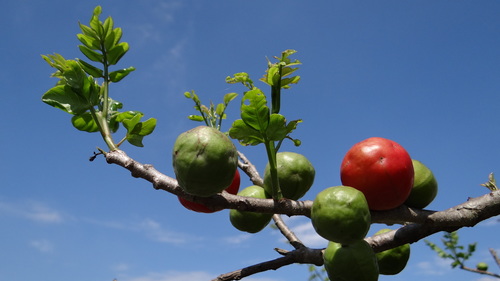
Red mombin (Spondias purpurea) is a tropical deciduous tree from Mexico through Central America and northern South America, widely planted for tart-sweet plum-like fruit that ripens in warm wet-to-dry seasonal rhythms. Trees are often 15–30 feet (4.5–9 m), briefly leafless before flowering on bare wood, then flushing new growth in waves tied to rainfall. In diversified warm-climate systems it extends the Spondias toolkit alongside June plum and yellow mombin for staggered harvest personalities. ☀️💧 Sun and Water Requirements: Full sun for reliable fruiting; partial shade only for juvenile establishment. Deep, well-drained soils with irrigation through pronounced dry seasons prevent fruit drop and tip burn. Wind protection helps brittle branches when fruit loads peak. ✂️ Propagation: Graft known selections for fruit quality; seedlings vary in acidity and fiber. Air-layer high performers in humid warmth. Prune after harvest for height control and to remove inward-crossing wood. 🌾 Harvest / Best Use Timing: Pick when skin color shifts and flesh yields slightly—lines range from yellow to red depending on genotype. Eat fresh, pickle, or candy per regional recipes; process windfalls quickly to reduce fly festivals. Peak loads track local wet-dry calendars, not temperate months.
Permaculture Functions
- Edible: Fruit diversifies warm-season harvests with acid-forward flavor suited to drinks and preserves.
- Wildlife Attractor: Flowers and fruit engage birds and insects where sharing is intentional.
- Shade Provider: Canopy shelters understory herbs during tropical dry-season sun.
- Windbreaker: Multiple trees in rows blunt steady winds on exposed lots when trained young.
Practitioner Notes
- Bare-branch flowering is a field ID flex—do not panic every dry season; leaves return on rainfall’s schedule.
- Seedling fruit roulette is real—graft if you sell to strangers, seedlings if you like plot twists.
- Fruit flies RSVP to ground drops—sanitize fallen fruit or accept larval confetti.
- Chill below roughly 28°F (-2°C) damages young growth—protect saplings on marginal subtropical sites.
Companion Planting
- June Plum — related Spondias with overlapping culture but distinct fruit timing in mixed rows
- Papaya — fast fruiting neighbor using vertical space during mombin juvenile years
- Lemongrass — perimeter herb marking irrigation lines and volatile edges along the dripline
- Anacardiaceae sap sensitivity—some people react to handling; research before casual pruning bare-handed
- Name collision—“Spanish Plum” and “Hog Plum” float across Spondias species—this entry is Spondias purpurea
Pest Pressure