About
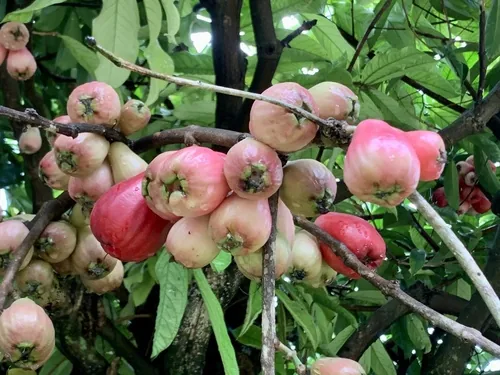
Mountain apple (Syzygium malaccense) is a tropical tree from Southeast Asia and Melanesia, widely planted in humid lowlands and island food forests for crimson new growth, fluffy flowers, and large bell-shaped fruit with crisp, mildly sweet white flesh. Trees often reach 40–60 feet (12–18 m) in protected sites, forming a rounded crown that shades understory crops. It is a classic backyard fruit along equatorial coasts and a reliable heat-lover that sulks when nights dip near freezing. Full sun for dense flowering and fruiting; young trees accept light shade during establishment. Rich, well-drained soils with steady moisture through the warm wet season and irrigation in pronounced dry spells prevent fruit abortion. Wind-sheltered sites protect large leaves from tattering; salt spray is not its favorite neighbor. Air-layer or graft selected cultivars; seeds yield variable fruit quality but are fine for rootstocks and experiments. Prune to a single leader initially, then open the crown for light on fruiting wood. Remove water sprouts after heavy rains to keep structure legible. Pick when color deepens and fruit yields slightly to gentle pressure—lines vary from white to deep red skins. Eat fresh quickly; thin skin bruises if handled like baseballs. Expect peak loads synchronized with local wet-season warmth rather than calendar holidays.
Permaculture Functions
- Edible: Bell-shaped Syzygium malaccense fruit gives crisp, mildly sweet white flesh best eaten bruise-free out of hand or sliced into fruit salads -- thin skin marks pressure fast, so harvest on color deepening and slight yield, then refrigerate briefly because shelf life is honest tropical fruit short.
- Shade Provider: Rounded 12–18 m canopy throws humid-tropical shade for cacao understory, vanilla poles, turmeric patches, or nursery tables -- wind-shelter the crown early so large myrtle leaves do not tatter into lace.
- Wildlife Attractor: Showy cream inflorescences with masses of exserted stamens feed bees, syrphid flies, and other generalist pollinators during warm-season bloom waves -- ripe fruit feeds frugivorous birds unless you net clusters.
- Ornamental: Crimson leaf flushes between gloss-green panels sell the tree along driveways and sight lines even when fruit load is light -- pair placement with drainage because waterlogged roots abort flowers quietly.
Companion Planting
- Same species appears under multiple common names in trade—verify scion labels against this scientific ID
- Frost near 30°F (-1°C) scars young leaves—protect saplings on marginal subtropical sites
Threats & Pressure