About
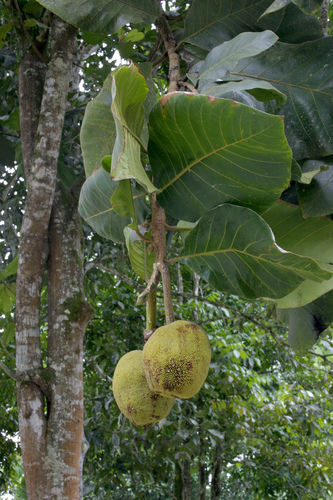
Tarap (Artocarpus odoratissimus) is a Bornean jackfruit relative bearing large, knobby syncarps with sweet, aromatic flesh distinct from jackfruit and chempedak in texture and odor profile. Trees reach 50–80 feet (15–24 m) in tropical lowlands, with a dense crown and latex-bearing tissues like other Artocarpus. It belongs in humid tropical food forests where heat and rainfall stay generous and frost is a rumor. ☀️💧 Sun and Water Requirements: Full sun for reliable fruiting once established; young plants appreciate partial shade. Deep, fertile, well-drained soils with steady moisture through the warm wet season and irrigation in dry spells support large fruit. Wind protection helps big leaves and heavy fruit clusters. ✂️ Propagation: Graft known cultivars; seedlings vary in fruit quality and odor diplomacy. Prune for clearance under heavy fruiting branches. 🌾 Harvest / Best Use Timing: Harvest when aroma peaks and color shifts—process quickly; thin skin and soft flesh spoil fast. Peak loads track tropical wet-dry rhythms, not temperate months.
Permaculture Functions
- Edible: Sweet aromatic fruit diversifies jackfruit-family harvests for fresh eating and processing.
- Shade Provider: Broad crown shelters understory crops during peak tropical sun.
- Wildlife Attractor: Fruit and flowers engage bats, birds, and insects—plan sharing or netting.
- Mulcher: Large leaves build rapid organic matter banks under the drip line.
Practitioner Notes
- Marang names overlap in markets—Artocarpus odoratissimus is the scientific anchor for tarap/marang debates.
- Soft fruit waits for no photographer—harvest crews beat influencers to spoilage timelines.
- Seedling odor roulette is real—graft known performers if you sell to strangers.
- Wide crowns eat fence lines—prune early if property lines matter more than fruit counts.
Companion Planting
- Jackfruit — related Moraceae neighbor with staggered fruit personality in a warm-climate row
- Cacao — shade-tolerant understory tree beneath broken high canopy
- Ginger — rhizome groundcover along driplines where irrigation is managed
- Latex — gloves and eye awareness during heavy pruning
- Frost — not for marginal subtropical sites without protection
Pest Pressure