About
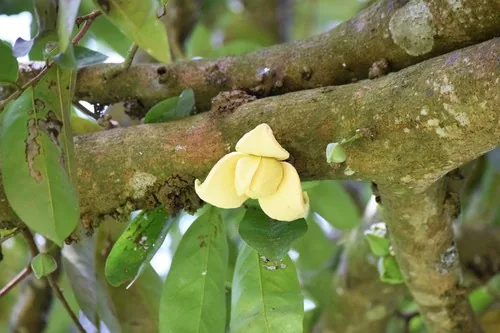
Rollinia (Rollinia deliciosa) is a fast-growing, soft-wooded tree in the custard-apple family, bearing large, yellow, soft-spined fruits with creamy, citrus-banana flavored pulp. Mature trees are typically small to medium in stature with open, somewhat brittle branching; fruit hangs on long stalks and ripens in warm, humid weather. It is native to South American lowlands and is grown wherever true tropical conditions hold. In subtropical and tropical Americas, rollinia is a collector’s fruit outdoors only in reliably frost-free pockets (roughly zone 10b+); younger wood is cold-sensitive. Puerto Rico’s year-round warmth suits fruiting cycles; Florida growers in marginal areas use greenhouses or heavy microclimate protection. Salt spray and drought during fruit set reduce quality. Young trees appreciate partial shade; fruiting adults tolerate more sun in humid tropics if soil moisture stays steady. Deep, fertile, well-drained soil; consistent watering through flowering and fruit fill; poor drainage invites root problems. Protect from strong, drying winds that tear soft leaves and stress fruit set. Seeds are common for home use but offspring vary; sow fresh seed in warm, moist medium. Grafting onto compatible Annona rootstocks is used where skilled growers want known fruit quality. Pick fruit when color brightens and spines soften slightly; overripe fruit drops and attracts wildlife overnight. Use fresh pulp soon after harvest; flavor is best before fermentation sets in.
Permaculture Functions
- Edible: Rollinia deliciosa yellow soft-spined fruit yields citrus-banana custard pulp for spoons and freezer sorbet when picked as spines soften and color brightens -- overripe globes split overnight into fermenting mash if you delay the kitchen.
- Ornamental: Pendant dinosaur eggs on long stalks under an open, brittle crown sell tropical drama on pool berms and collector orchards -- thin wind-torn twigs after storms so the silhouette stays legible, not wrecked lace.
- Wildlife Attractor: Drops and splits call fruit bats, opossums, and wasp clouds in true tropics within hours -- harvest daily in season or accept winged and six-legged co-owners of the biriba payroll.
Companion Planting
- Wind-exposed hilltops
- Heavy wet clay
Threats & Pressure