About
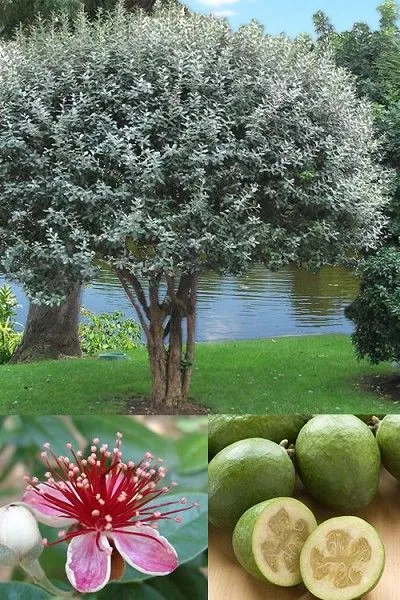
Pineapple Guava (*Acca sellowiana*), also known as Feijoa, is an evergreen shrub or small tree native to South America. It typically grows 10 to 15 feet (3 to 4.5 meters) tall and wide, featuring dark green, glossy leaves with silvery, slightly fuzzy undersides. The plant produces striking flowers in late spring, characterized by fleshy white or pink petals and prominent burgundy stamens. These flowers are not only ornamental but also edible, adding a sweet flavor to salads. The fruit, maturing between August and October, is egg-shaped, starting gray-green and turning reddish-brown upon ripening. The pulp has a unique taste reminiscent of minty pineapple or guava. Seeds: Sow fresh seeds in well-draining soil. Germination occurs in about three weeks, but seedlings may take several years to bear fruit and might not produce high-quality yields. Cuttings: Semi-hardwood cuttings taken in the fall can root successfully with bottom heat and misting, leading to fruiting in a shorter period compared to seedlings. Grafting: This method ensures desirable fruit characteristics and can expedite the fruiting process. Sun: Prefers full sun but can tolerate partial shade. Full sun exposure promotes better flowering and fruiting. Water: While drought-tolerant once established, regular watering during flowering and fruiting seasons enhances yield and prevents fruit drop. Ensure the soil is well-draining to avoid waterlogging. Fruits: Typically ripen between August and October. Ripe fruits often fall from the plant; they can also be picked when slightly soft to the touch and allowed to ripen off the plant.
Permaculture Functions
- Edible: Egg-shaped fruit ripens dull green to soft gray-green with clear jelly seed cavity -- scoop with a spoon or bite the thin skin; fleshy spring petals taste cucumber-sweet in mixed salads before fruit set.
- Pollinator: Burgundy brush of exserted stamens sheds pollen for generalist bees on warm afternoons -- hand-pollinate a few flowers if fruit counts stay low on solitary shrubs in windy courtyards.
- Wildlife Attractor: Mockingbirds and jays work fallen fruit under the hedge -- leave windfalls if you want free cleanup and fertilizer spots that reseed moss, not lawn.
- Windbreaker: Evergreen myrtle-relative foliage to twelve feet knits a second row inside salt-pruned coastal pines -- where broadleaf texture is still needed.
- Border Plant: Shear lightly after bloom if you need a formal face toward the sidewalk -- unpruned plants read as loose screens that hide compost bins without feeling like suburban wall-to-wall turf.
Threats & Pressure