About
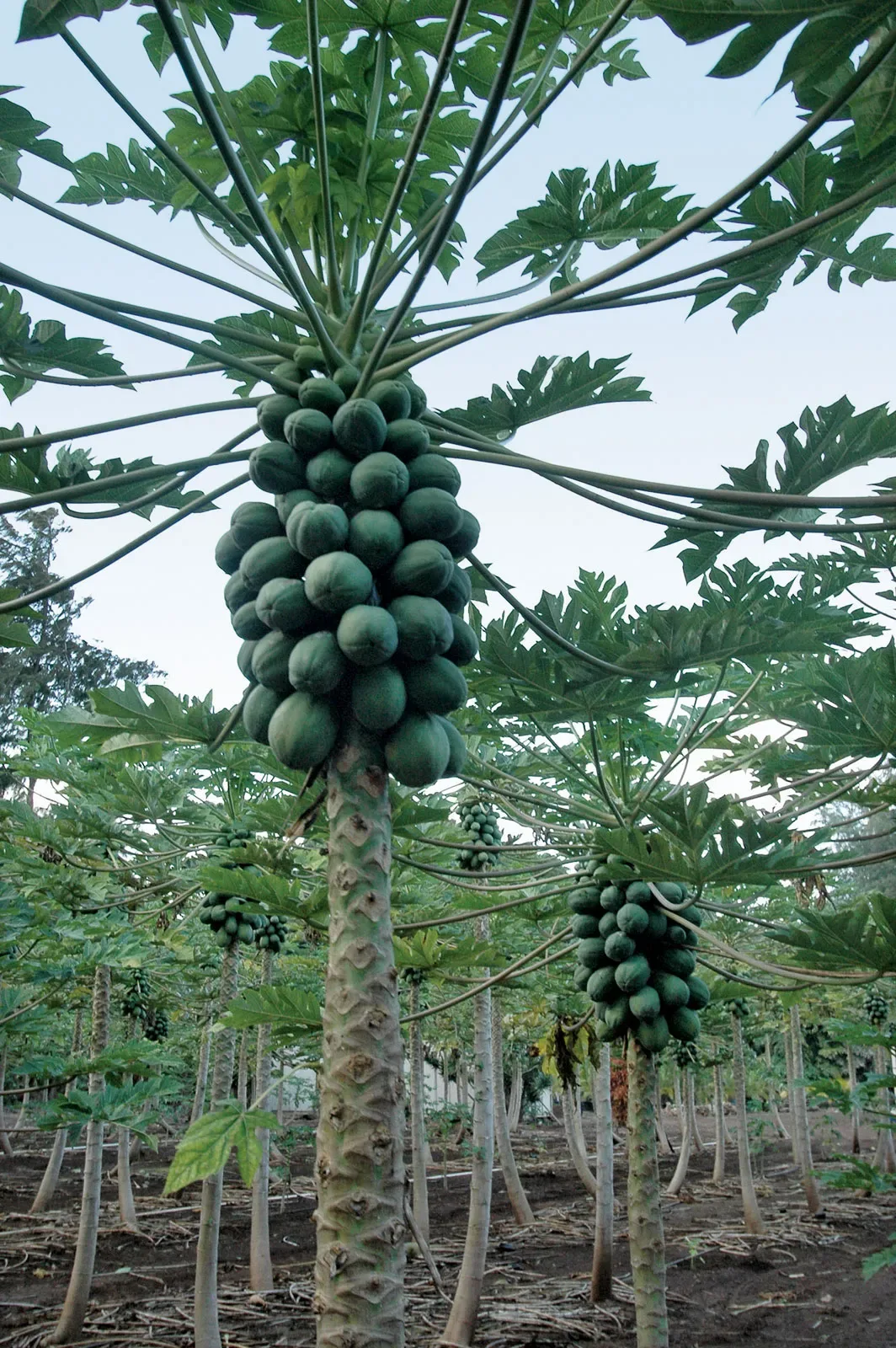
Papaya is a fast-growing, tropical fruit tree native to Central America. It typically reaches heights of 3-10 meters (10-33 feet) with a single, unbranched trunk topped by a crown of large, palmate leaves. The tree produces oval-shaped fruits with green skin that ripen to yellow or orange, containing sweet, orange flesh and numerous black seeds. Papayas thrive in full sun and well-drained soils. They require consistent moisture but are sensitive to waterlogged conditions, which can lead to root rot. Regular watering is essential, especially during dry periods. Propagation is commonly done through seeds. To grow from seed: 1. Extract seeds from a ripe papaya fruit. 2. Clean and dry the seeds. 3. Plant seeds directly in the desired location, as papayas do not transplant well due to their sensitive root systems. 4. Seeds typically germinate in about two weeks. Harvesting occurs when the fruit's skin changes from green to yellow, usually 6-9 months after planting. Fruits can be picked when partially yellow and allowed to ripen off the tree.
Permaculture Functions
- Edible: Carica papaya melons ripen from green to yellow-orange with musky-sweet flesh around central black seeds for fresh eating, smoothies, and green-papaya salads -- thin to single-stem females (or hermaphrodite lines) for reliable fruit; bag clusters if fruit flies own your block.
- Medicinal: Latex-rich green skin and seed arils supply papain-rich enzymes used in wound debridement products and folk meat tenderizers -- skin contact can trigger latex allergy; keep pharmacologic dosing outside casual kitchen guessing.
- Wildlife Attractor: Nectar-rich nocturnal flowers draw sphinx moths; ripe fruit feeds fruit bats and birds unless netted -- expect wasp interest at sap scars on trunk.
- Mulcher: Huge palmate leaves drop weekly in the tropics, building fast-rotting mulch rings high in potassium -- rake into guild beds but keep mulch doughnut away from collar to reduce phytophthora risk.
- Dynamic Accumulator: Shallow fibrous roots plus deep sinker tips mine volcanic soils for K and Ca expressed in leaf ash -- compost fallen blades before planting heavy-feeding understory vines into the same ring.
- Erosion Control: Quick 3–10 m establishment on slopes stabilizes cut banks and orchard terraces where slower trees would stay bare the first years -- pair with vetiver or lemongrass on the downhill toe for first-season armor.
- Animal Fodder: Finely chopped leaves and sliced green fruit pulp feed dairy cattle and pigs across humid tropics after drying or ensiling to reduce latex sting -- always introduce rations gradually because gut microbes need training.
- Border Plant: Soft-wooded single trunks screen fences and poultry yards within one rainy season -- replant roughly decade-scale because hollow stems eventually lodge in wind unless topped on purpose.
- Pest Management: Fermented leaf teas and interplanted aromatics confuse some chewing insects in anecdotal trials -- still scout for ringspot virus vectors because companion scent is not a substitute for clean tools and tolerant cultivars.
Companion Planting
Also mentioned as companions:
- Mustard
Not yet profiled in PermiePortal
- None specified
Threats & Pressure