About
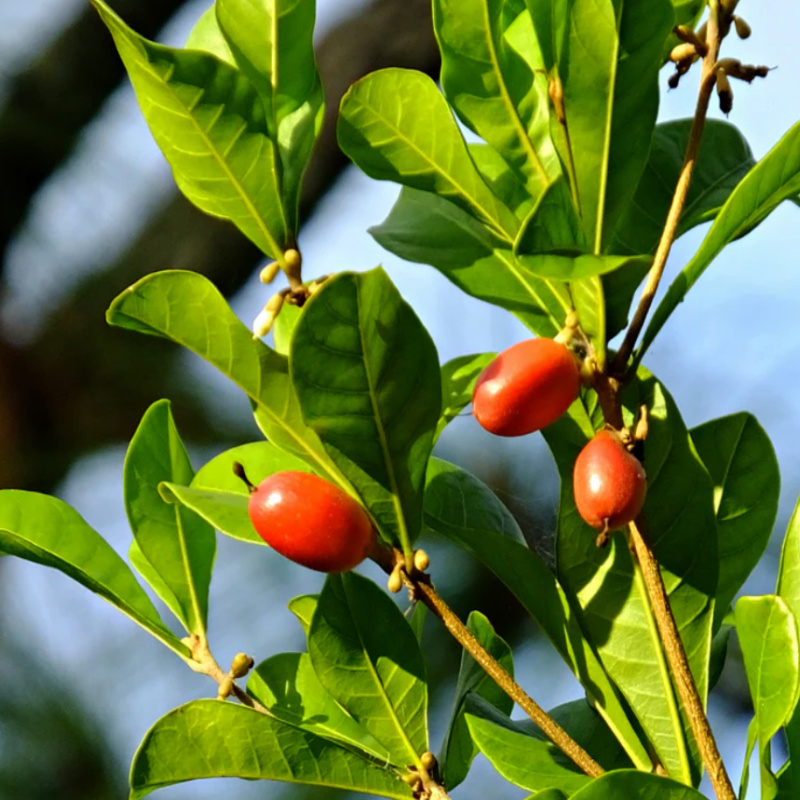
Synsepalum dulcificum, commonly known as Miracle Fruit, is an evergreen shrub native to West Africa. It typically grows up to 1.8–4.5 meters (6–15 feet) in height and has dense foliage with dark green, oval leaves measuring 5–10 centimeters (2–4 inches) in length. The plant produces small, white flowers throughout the year, which develop into red, oval berries approximately 2 centimeters (0.8 inches) long. These berries contain a glycoprotein called miraculin that temporarily alters taste perception, making sour foods taste sweet. 🌞💧 Sun and Water Requirements: Miracle Fruit thrives in partial shade and requires high humidity. It prefers acidic soils with a pH between 4.5 and 5.8. The plant is drought-tolerant but benefits from regular watering to maintain soil moisture. ✂️🫘 Methods to Propagate: Propagation is typically done through seeds, which require 14 to 21 days to germinate. Seeds should be planted in acidic, well-draining soil and kept moist. Alternatively, cuttings can be used, though they may be more challenging to root. 🧑🌾👩🌾 When to Harvest: The plant begins to bear fruit after 3 to 4 years of growth, producing two crops per year, usually after the end of the rainy season. Berries should be harvested when they turn bright red and are fully ripe.
Permaculture Functions
- **Edible**: The berries are consumed to alter taste perception, making sour foods taste sweet.
- **Medicinal**: Potential use in improving the palatability of certain medications.
- **Pollinator**: The small white flowers attract pollinators, aiding in garden biodiversity.
- **Wildlife Attractor**: The berries can attract birds and other wildlife.
- **Border Plant**: Can be used as an ornamental shrub in garden borders.
Practitioner Notes
- Harvest texture changes faster than color—nip one sample before you commit the whole row to a pick date.
- Label jars with plant part and date the day you seal—future you is not psychic.
- Morning photos for ID are useless if you only look at dusk—check midday nectar presentation too.
- Sharp tools and clean cuts beat torn stems; disease spores love frayed tissue more than rhetoric.
Companion Planting
- Blueberry
- Azalea
- Camellia
- Plants requiring neutral to alkaline soil
Pest Pressure