About
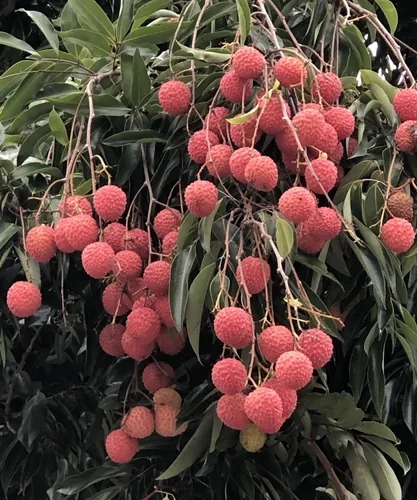
Lychee is the soapberry-family diva: glossy evergreen leaves, panicles of cream flowers, and fruit that spoils faster than your weekend plans. Wind, soggy roots, and winter nerves are how dreams die. In-ground reliability needs serious frost-free microclimate; marginal zones mean potted culture or periodic dieback. True tropical lowlands suit lychee where drainage and wind protection are handled—dry-season irrigation discipline matters everywhere. Full sun for flowering and fruit set once hardened off. Deep, acidic, well-drained soil; careful irrigation—Phytophthora does not need encouragement. Air-layering and grafting for true-to-type trees. Seeds for rootstock experiments, not fruit patience. Pick clusters when skin rouges and sugars peak; handle gently—pericarp browning is the clock ticking. Eat or refrigerate promptly; “lychee logistics” is why backyard fruit beats grocery roulette.
Permaculture Functions
- Edible: Litchi chinensis arils are crisp-grape sweet with floral perfume when skin turns rough red -- eat or chill within hours because pericarp browning marks enzymatic clock, not patience.
- Ornamental: Glossy even-pinnate leaves and red new flushes read subtropical luxe -- protect young trees from desiccating wind or leaf margins bronze while fruit set aborts.
- Wildlife Attractor: Raccoons and birds strip color-break clusters overnight -- net entire canopies or harvest slightly green-ripe for cooking if vertebrate tithe is not budgeted.
Companion Planting
- High pH water and soil without amendment
- Lawn herbicide drift
Threats & Pressure