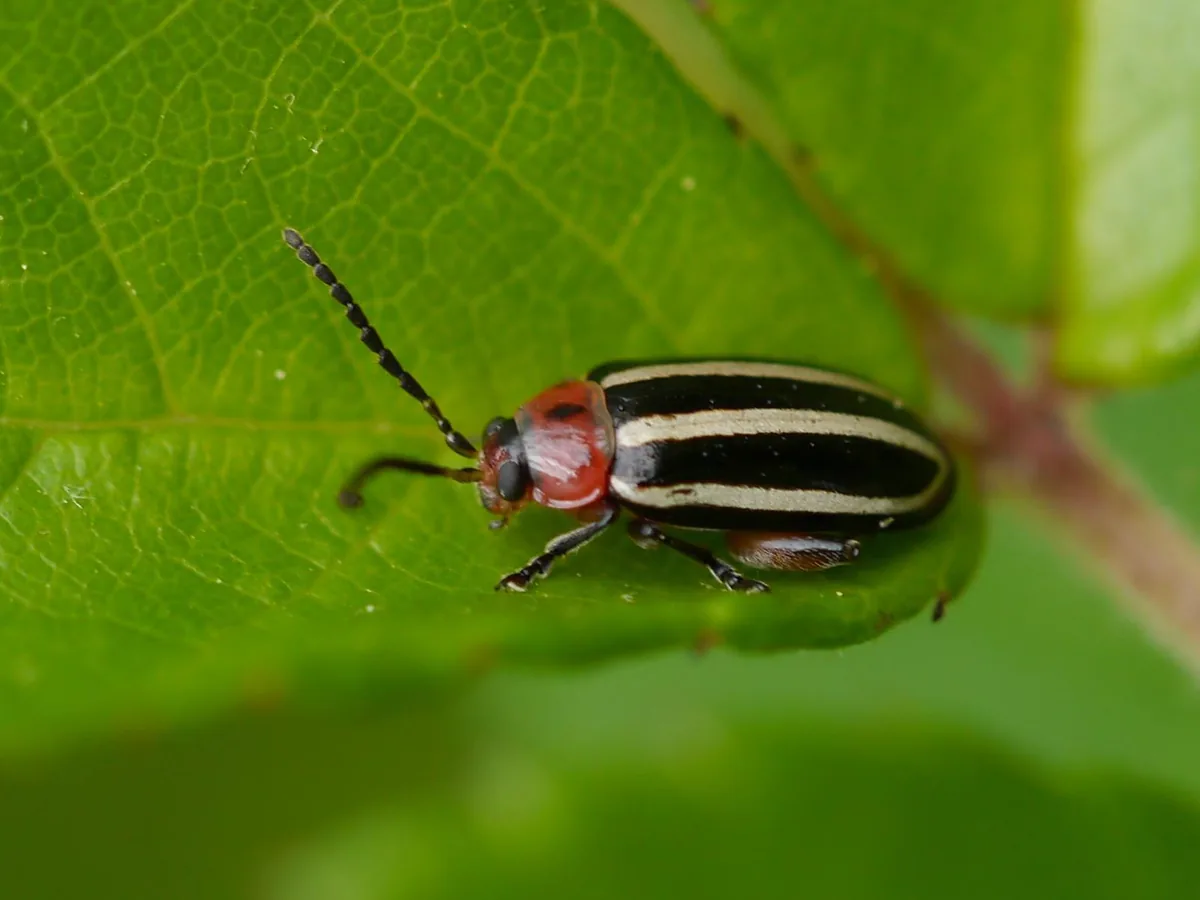
Field Identification
If new growth is curling, yellowing, sticky, or chewed, flea beetles may already be on the plant. This pest often builds quietly, then damage appears all at once. Feeding stress weakens growth, reduces yield, and opens the door to secondary disease. Early cleanup is much easier than fighting a full population surge later.
Inspect the newest growth first: leaf undersides, flower buds, stem joints, and tender tips where pests gather. Look for body shape, color, eggs, cast skins, honeydew, webbing, or fresh puncture marks. A hand lens and a white paper tap test help reveal small life stages. Matching visible pests with fresh plant damage confirms active infestation.
Not sure what you have? Use the symptom diagnosis tool →
How to Deal With It
Organic Control Methods
Ground beetles are the most important predator of flea beetle eggs and larvae in soil — permanent mulch, undisturbed soil edges, and diverse plantings support ground beetle populations year-round. Braconid wasps parasitize larvae. Entomopathogenic nematodes (Steinernema carpocapsae) applied to soil target larvae and pupae — apply in spring when soil reaches 60F (15C). Flea beetles have many natural enemies but none fast enough to manage an acute seedling infestation — biological control is long-term population management, not emergency response. Keep diverse habitat that supports predators before pressure peaks.
Flea beetles overwinter as adults in soil and leaf litter and emerge hungry when soil warms in spring — seedlings are at maximum risk during this window. The telltale sign is tiny round shot-holes in leaves with no visible insect (they jump when disturbed). Transplant larger starts rather than direct seeding — seedlings under 4 inches are most vulnerable. Delay planting 2-3 weeks after soil warms to let the first generation of overwintering adults disperse. Row covers installed before transplanting completely exclude flea beetles during the critical establishment window.
Reflective silver mulch confuses flea beetles and reduces landing rates significantly — one of the most effective and low-maintenance controls available. Interplant with strongly aromatic herbs — basil, catnip, mint — at bed edges to disrupt flea beetle navigation. Trap cropping with radishes or mustard greens at bed edges draws flea beetles away from target crops — destroy trap plants when heavily infested. Remove crop debris promptly to eliminate overwintering habitat. mechanical_physical: >- Row covers from transplant until plants are established are the most effective mechanical control — flea beetles cannot jump through fabric. Remove covers once plants reach 6 inches. Yellow sticky traps monitor adult populations. Diatomaceous earth dusted on leaves damages flea beetle bodies on contact — must be reapplied after rain. For small beds, a handheld vacuum in early morning when beetles are sluggish removes large numbers quickly.
Kaolin clay on leaf surfaces is the most effective and bee-safe spray option — apply every 7 days and after rain, coating new growth thoroughly. Spinosad provides strong knockdown of adults — apply at dusk to minimize bee exposure, reapply every 7-10 days. Neem oil disrupts flea beetle feeding and egg-laying. Pyrethrin provides quick knockdown but degrades in hours and harms all insects — use only at dusk as a last resort for overwhelming seedling infestations.
Let Nature Handle It
Natural Enemies
- Ladybugs
- Lacewings
- Parasitic Wasps
- Ground Beetles
Threat Map