About
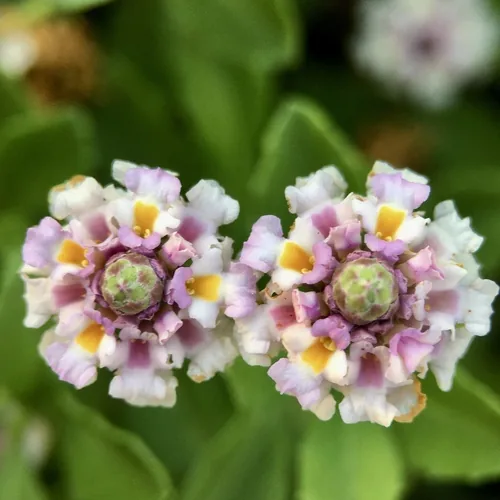
Frogfruit (*Phyla nodiflora*) is a low, mat-forming native perennial of the Americas, including Florida, with small opposite leaves and tiny white-to-lavender flowers in round heads. It tolerates mowing, foot traffic, and periodic flooding better than most turf alternatives, spreading by stolons to knit soil. Height is usually under 4 inches with flowers on short vertical stalks. In Puerto Rico and coastal Florida it is a workhorse for swales, pond edges, and hot pavement strips where salt spray occasionally occurs. Full sun to light shade. Established mats are drought-tolerant but look freshest with occasional irrigation during dry season. Saturated wet season soils are fine if sunlight is adequate. Stolons: Press rooted runners into moist soil anytime it is warm; they root at nodes quickly. Cuttings: Snip pieces with nodes, lay on damp sand or soil, and keep humid until anchored. For living mulch establishment, plant before rainy season for fastest spread. Trim or roll mats after flowering if you need a tighter look; leave some flowers for pollinators during peak heat.
Permaculture Functions
- Ground Cover: Phyla nodiflora stolons root at nodes to replace bermudagrass in sunned swales -- where mower height stays three inches and salt spray occasionally browns turf blades on coastal Florida retrofit bioswale berms you finally graded.
- Pollinator: White-to-lavender verbenaceous heads feed skippers and micro-halictids through August heat -- when suburban nectar gaps show on aerial imagery hot spots above St. Augustine lawns you stopped overwatering last year.
- Erosion Control: Mat weave holds bank soil during five-inch rain bursts on pond returns tested in the same rain-garden strips -- where rush overflow would have carved gullies if bare soil stayed downhill from your roof downspout.
- Ornamental: Tiny round heads hover above dime leaves for months -- without deadheading fatigue designers get from short-lived annual color flats on the same formal path edges you edged with steel strip instead of plastic.
- Wildlife Attractor: Ground-level spider and insect traffic feeds anole and warbler pick routes -- between pavement and marsh cordgrass on edges you widened past three feet so cruising predators actually notice the insect volume.
Companion Planting
Threats & Pressure