About
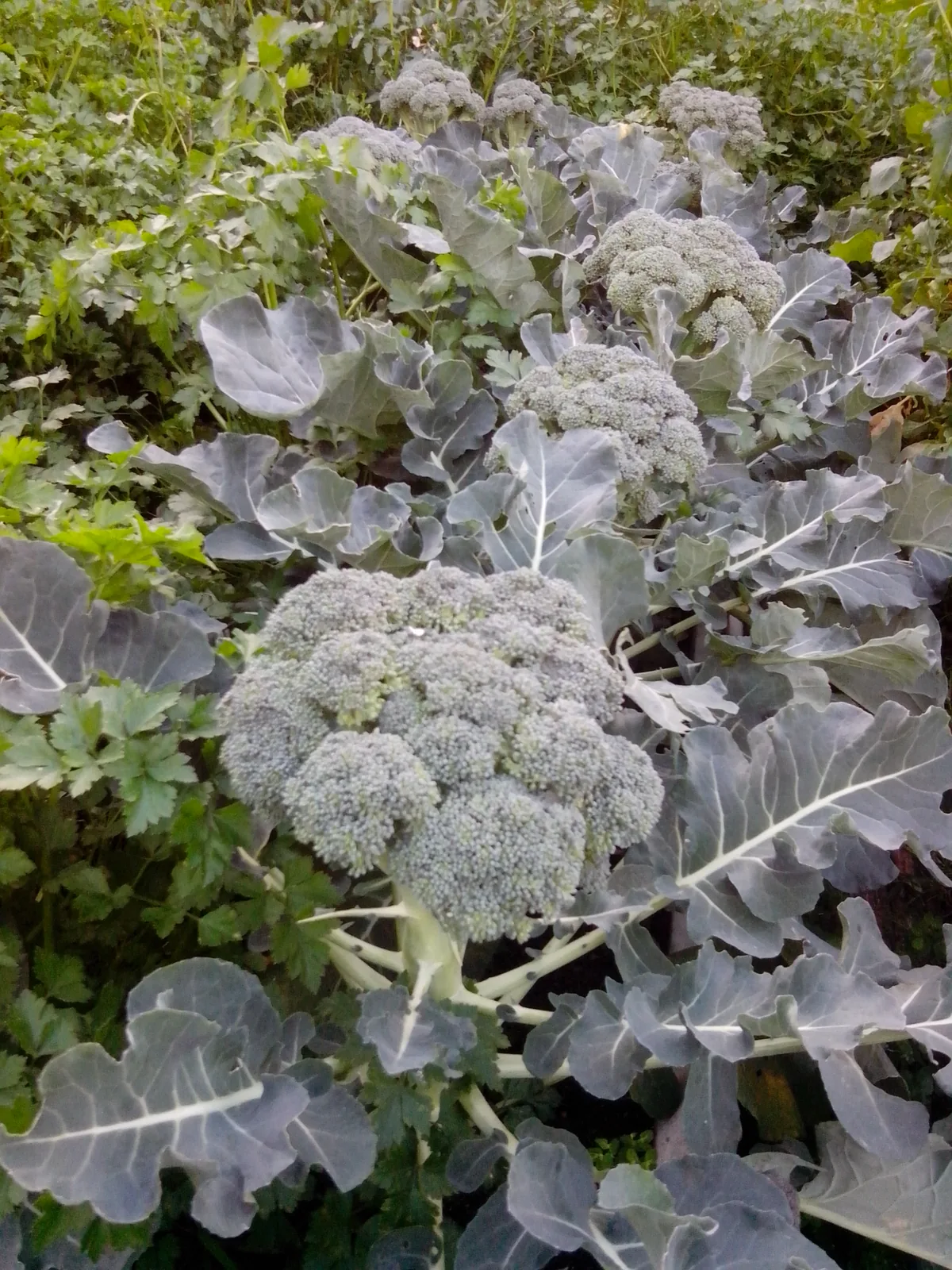
Broccoli is a cool-season annual vegetable known for its large, green flowering head and thick stalk. The plant typically grows to a height of 60–90 cm (24–35 inches) and features dense clusters of unopened flower buds arranged in a tree-like structure. Broccoli thrives in fertile, well-drained soils with a pH between 6.0 and 7.0. It is a heavy feeder, requiring rich soil and consistent moisture for optimal growth. Broccoli requires full sun, needing at least 6 hours of direct sunlight daily. Consistent moisture is essential; however, overwatering should be avoided to prevent root diseases. Mulching helps retain soil moisture and maintain cooler soil temperatures. Broccoli is propagated from seeds. For spring planting, sow seeds indoors 6–8 weeks before the last expected frost date. Transplant seedlings outdoors 2–3 weeks before the last frost, spacing them 45–60 cm (18–24 inches) apart. For a fall harvest, direct sow seeds outdoors in mid to late summer, ensuring they have sufficient time to mature before the first frost. Harvest broccoli when the central head is fully developed but before the flower buds open, typically 50–90 days after transplanting. Cut the main stem about 15 cm (6 inches) below the head. After the central head is harvested, smaller side shoots will develop, providing additional yield over several weeks.
Permaculture Functions
- Edible: Brassica oleracea var. italica central heads cut at tight bead stage give blanched stems for stir-fry, -- while side shoots extend pickings for weeks if you leave lower leaves.
- Medicinal: Bud tissue concentrates glucoraphanin that forms sulforaphane after chopping, the compound labs chase -- for phase-II enzyme signaling, still a food dose unless you are juicing heads by the liter.
- Pollinator: If you miss one head, yellow four-petaled flowers open in umbels that honeybees work heavily -- before you finally pull the bolted plant for compost.
- Ground Cover: Wide waxy leaves shade row middles during cool seasons -- slowing evaporation and hiding flea beetle flights until you scout undersides.
Threats & Pressure