About
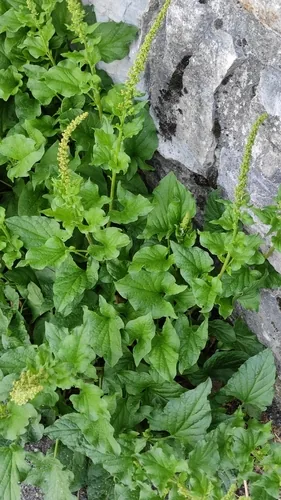
Good King Henry (*Blitum bonus-henricus*, formerly *Chenopodium bonus-henricus*) is a European perennial vegetable related to spinach, forming a low mound of arrow-shaped leaves and tall flower spikes of tiny green blooms. Young shoots are eaten like asparagus; leaves are used as a cooking green. Plants spread slowly by rhizomes to form a patch 1–2 feet tall. In subtropical and tropical Americas it performs as a cool-season perennial—plant in part shade with steady moisture and harvest heavily before the steamy wet season stresses foliage. Morning sun and afternoon shade in hot climates. Rich, humusy soil that stays evenly moist but not flooded. Mulch keeps roots cool during warm months. Root divisions: Split crowns in early spring or fall; replant with buds just below the surface. Seeds: Sow in cool weather; germination can be slow—keep seed trays from baking in direct tropical sun. Pick shoots when pencil-thick in spring; harvest young leaves before flowering for mildest flavor. Blanch or cook like spinach; rotate harvest across the patch to avoid weakening the stand.
Permaculture Functions
- Edible: Blitum bonus-henricus yields mild, spinach-like leaves and pencil-thick spring shoots you blanch or cook -- harvest young leaves before tall flower spikes toughen flavor and rotate picks so crowns stay productive year after year.
- Ground Cover: Low mounds of arrow-shaped leaves spread slowly by rhizomes to carpet soil under taller perennials -- use it where you want a perennial cooking green that does not climb neighbors.
- Dynamic Accumulator: Roots pull minerals into leaf tissue that you recycle by chop-and-drop or composting spent tops -- the payoff is fertility cycling without importing bagged amendments into the herb layer.
- Wildlife Attractor: Tiny green insectary flowers on upright spikes feed small pollinators and parasitoid wasps early -- useful when you want beneficial insect support before big summer composites open.
Companion Planting
Threats & Pressure