About
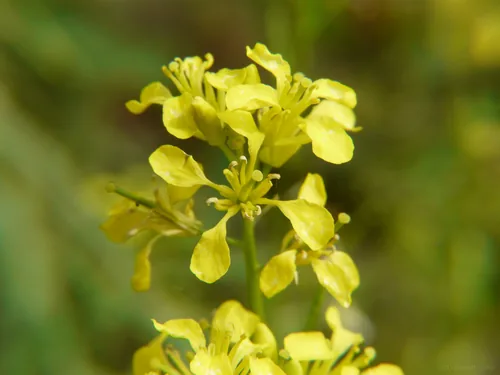
Wild mustard greens here refers to naturalized and feral populations of Brassica juncea—fast-bolting mustard with lobed leaves and bright yellow four-petaled flowers on tall racemes. Plants behave as cool-season annuals or biennials, often 0.6–1.5 m (2–5 ft) when flowering, and colonize disturbed ground with brassica confidence. In subtropical and tropical Americas they shine in the cooler months; summer heat pushes quick bolting unless you select heat-tolerant lines and harvest young. Full sun for compact growth; light shade slows bolting briefly in warm snaps. Steady moisture for tender leaves; mature plants tolerate drier spells. Avoid waterlogged beds—clubroot relatives hate suffocated roots. Direct-sow seed in fall through early spring (adjust for subtropical/tropical cool windows). Thin seedlings to 15–20 cm for leaf crops; allow wider spacing for seed saving. Save dry pods when brown; winnow chaff before storing. Pick rosette and stem leaves while young and mild; older leaves need longer cooking. Flower buds can be treated like broccolini; identify confidently before eating from roadsides.
Permaculture Functions
- Edible: Brassica juncea feral rosettes carry wasabi-adjacent heat -- pick young before summer bolts turn stems woody.
- Dynamic Accumulator: Fast winter growth mines leftover N after summer crops -- chop before pods shatter or you volunteer mustard forever.
- Wildlife Attractor: Yellow four-petaled flowers feed early bees -- leave a few heads if you want green lacewing habitat.
- Biomass: Pulled thinnings bulk compost piles hot -- mix with browns; sulforaphane smell tells you it is working.
Companion Planting