About
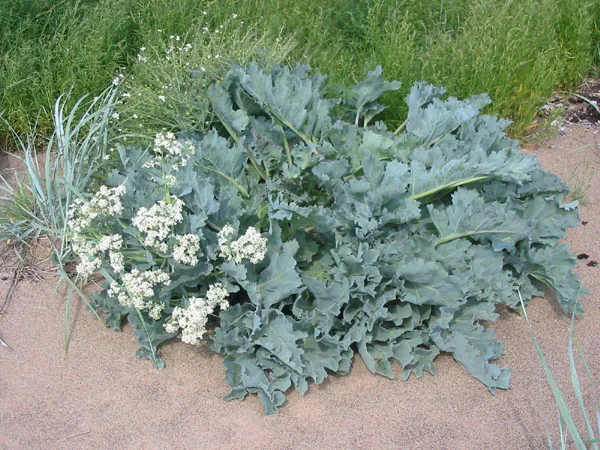
Sea kale (Crambe maritima) is a perennial brassica of European and Black Sea coasts, forming a basal rosette of thick, waxy blue-green leaves and summer clouds of white four-petaled flowers on branching stems to about 2–3 feet. Plants spread slowly by rhizomes and resemble a wild cabbage adapted to sand, salt spray, and poor fertility; blanched spring shoots (“sea kale chicory” style) are a traditional crop. Full sun with excellent drainage; tolerates light coastal salinity. Regular water in fast-draining soil; hates summer waterlogging. In subtropical and tropical Americas lowland tropics it is a cool-season or maritime-trial crop—grow during the coolest months in raised gritty beds, or accept dormancy during intense heat. Root cuttings: take thick root pieces in winter, bury horizontally in sand, keep moist until shoots appear. Seeds: sow fresh; plants take a few years to reach full cropping size. Mound plants in late winter to blanch tender shoots in early spring; harvest leaves young for cooking like kale. Avoid stripping all foliage from first-year plants.
Permaculture Functions
- Edible: Crambe maritima shoots respond to late-winter forcing pots with pale stems that taste nutty after steaming -- leave enough crown leaves so rhizomes recharge before summer heat.
- Ground Cover: Glaucous cabbage-wide rosettes tile gravel mulch and beach sand -- where annual weeds lack footing.
- Erosion Control: Thick roots plunge through loose shingle so cliffs and dunes keep geometry -- after storms strip herbaceous competitors.
- Ornamental: Powder-blue foliage and umbels of white four-petaled flowers read deliberate in drought gardens -- that copy coastal geology.
- Dynamic Accumulator: Deep roots mine limited coastal nutrients into thick leaves that return minerals to the bed -- when you cut spent flower stems for mulch.