About
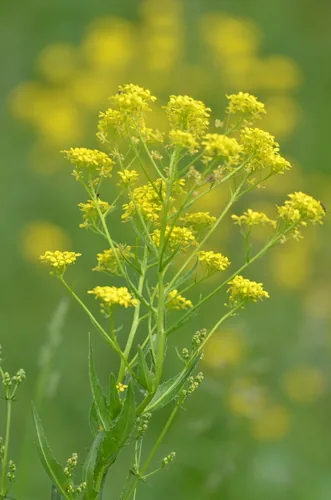
Turkish rocket (Bunias orientalis) is a long-lived mustard relative from Eurasia that forms a basal rosette of blistered, warty leaves and sends up 1–1.5 m (3–5 ft) flowering stems with small yellow four-petaled blooms. It is considered invasive in parts of North America—plant only where you will manage seed set and expansion, and prefer managed beds over wildlands in Florida and Puerto Rico introductions. Full sun to light shade; rosettes persist in partial shade but bloom weakens. Average soil moisture; drought-tolerant once established but grows lusher with summer rain. Tolerates poor, alkaline, or disturbed soils—do not mistake toughness for permission to neglect containment. Sow seed in spring or autumn in situ; thin to strong spacing to reduce self-sowing chaos. Divide mature crowns in early spring when the plant breaks dormancy; replant immediately and water until rooted. Root cuttings from young side shoots can work in nursery conditions. Pick young spring leaves for cooked greens; flavor is mustard-adjacent and benefits from blanching. Flower buds compare to broccoli raab when still tight. Cut flowering stems before seed set if you are containing spread; compost biomass away from fence lines.
Permaculture Functions
- Edible: Bunias orientalis young blistered leaves and broccoli-raab-style buds carry mustard heat without annual replanting -- blanch if bitterness spikes in summer rosettes.
- Biomass: Second-year flower spikes yield armloads of hollow stems for compost stacks when you cut before seed rain -- invasive where unmanaged, so harvest biomass is also containment.
- Wildlife Attractor: Small yellow four-petaled blooms open early on alkaline waste ground -- small bees arrive before summer composites crank up.
- Border Plant: Warty rosettes and upright spikes give structural texture at bed backs -- site only where you can deadhead or mow escapes.
- Dynamic Accumulator: Deep taproot pulls calcium and other minerals into leaves -- that return via chop-and-drop on poor, disturbed soils.