About
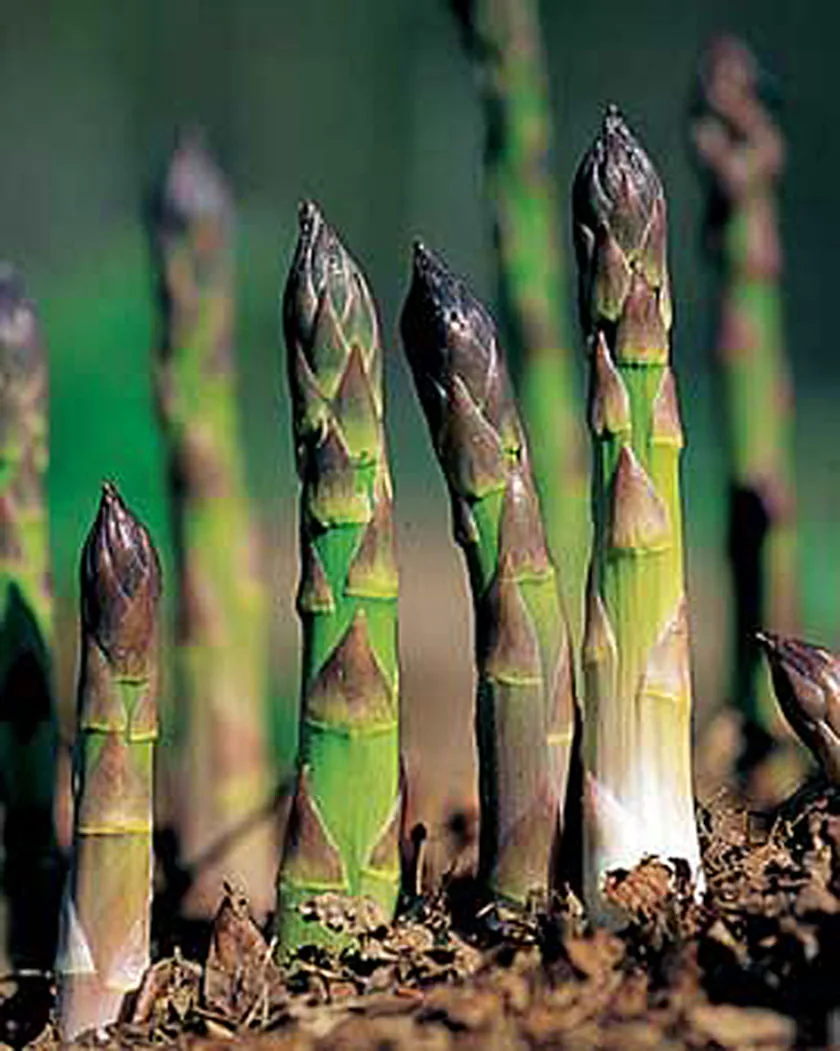
Asparagus (*Asparagus officinalis*) is a perennial flowering plant native to Eurasia, widely cultivated for its young shoots, which are consumed as a vegetable. The plant features feathery, fern-like foliage and can reach heights of 1.5 meters (5 feet). Asparagus thrives in well-drained soils with full sun exposure and is known for its early spring harvest of tender spears. Asparagus is typically propagated using one-year-old crowns, which are planted in trenches approximately 20-30 centimeters (8-12 inches) deep and spaced 30-45 centimeters (12-18 inches) apart. Alternatively, asparagus can be grown from seeds, though this method requires an additional year before harvesting. Seeds should be sown indoors 12-14 weeks before the last frost date and transplanted outdoors after the danger of frost has passed. Asparagus requires full sun, with at least 8 hours of direct sunlight daily. It prefers well-drained, sandy loam soils with a pH between 6.5 and 7.5. Consistent moisture is essential, especially during the establishment phase and spear production. However, overwatering should be avoided to prevent root rot. Harvesting begins in the third year after planting crowns. In early spring, spears are cut when they reach 15-20 centimeters (6-8 inches) in height. The harvest period lasts 6-8 weeks, after which spears should be allowed to grow into ferns to nourish the plant for the following season.
Permaculture Functions
- Edible: Asparagus officinalis spears push when soil hits 50°F (10°C) for a six-to-eight-week window before you let ferns rebuild crowns -- snap 18-20 cm shoots at soil line; peeling is for tough roadside wind rows, not fresh bed harvests.
- Medicinal: Root tea traditions cite mild diuretic use for spring kidney flushing in European herbals -- asparagine-rich chemistry means gout-prone folks check with clinicians before liter-a-day habits.
- Ground Cover: Tall summer ferns feather out into a light canopy that shades berries and rhubarb roots while shallow roots still let companions breathe -- female clones add red berries and self-sow if you skip all-male hybrids.
Threats & Pressure