About
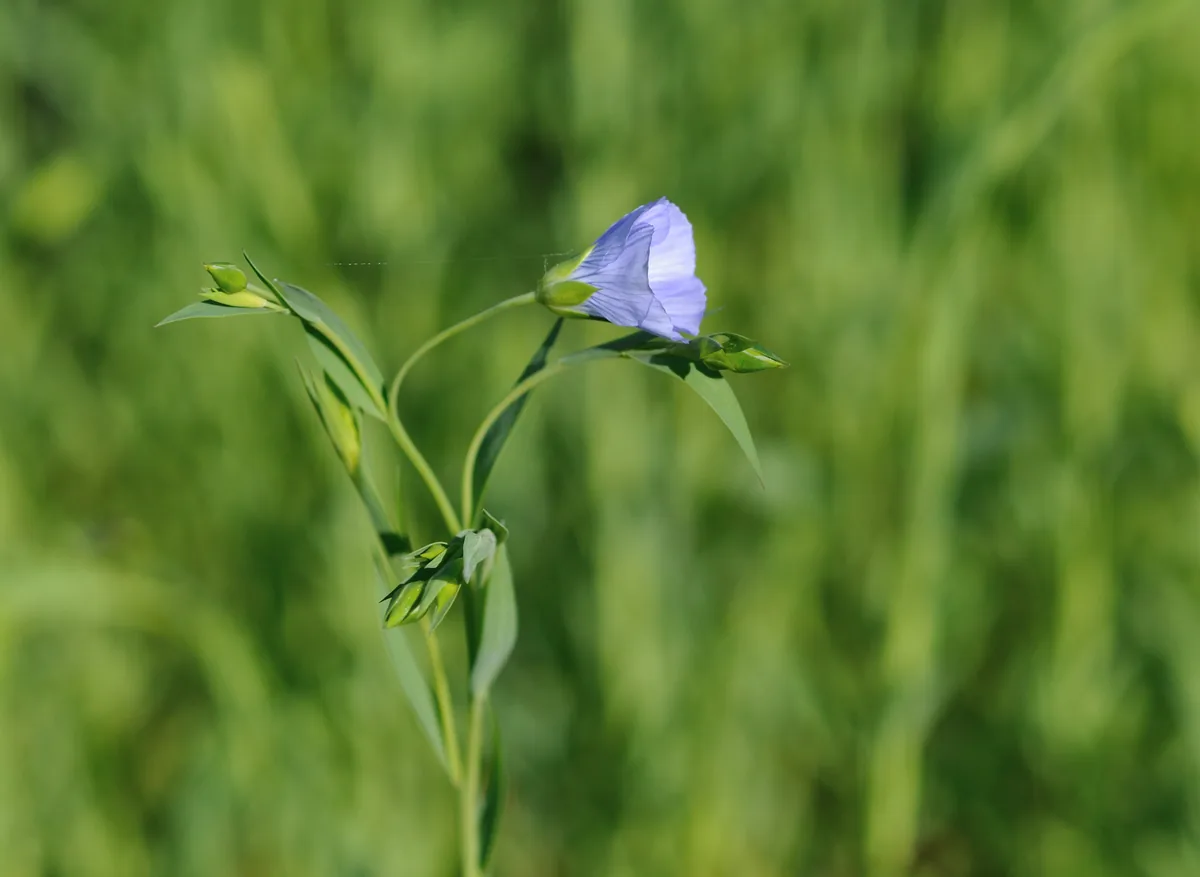
Flax is the skinny blue-flowered annual that gave us linen and linseed oil long before fast fashion and industrial seed oils pretended they invented fiber and fat. In a homestead row it is a short, upright crop with delicate five-petaled flowers that honeybees actually notice. Classic fiber flax prefers cool establishment; in warm climates run it as a cool-season or early-spring annual or accept shorter stems when heat arrives early. Seed (linseed) types tolerate more heat than fussy long-fiber lines. Full sun, well-drained soil. Drought-tolerant once established but wants even moisture during germination and early stem elongation—do not let seedlings crust over. Direct-seed; barely cover seed. Thin for fiber stands; leave more space for heavy seed heads if you are after oilseed. Pull for fiber when stems yellow; combine for linseed when capsules rattle—timing follows fiber versus oil goals.
Permaculture Functions
- Fiber: Linum usitatissimum long-fiber lines pulled at yellow straw yield linen-grade bast when dew-retted on field -- in hot climates switch to oilseed cultivars because stem length collapses once early heat hits elongation windows.
- Edible: Brown or golden linseed from ripe rattling capsules presses omega-3 oil -- and grinds into egg-replacer meal on upright three-foot annual rows timed before lodging risk spikes at summer solstice.
- Pollinator: Sky-blue five-petaled flowers open mornings for two to three weeks concentrating honeybees on narrow-leaved stands -- before capsules close on the same drill-seeded hectare.
Companion Planting
No companion data yet.
Also mentioned as companions:
- Oats
- Low-growing legumes
Not yet profiled in PermiePortal
- Heavy clay that waterlogs during sprouting
- Shady tree lines that encourage lodging
- Small grains
Threats & Pressure