About
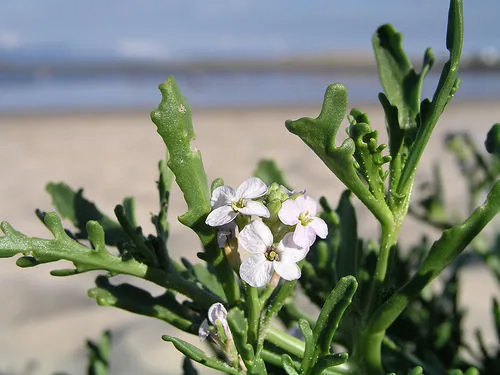
Sea rocket (Cakile lanceolata) is an annual or winter annual mustard of upper beaches and saline sands around much of North America and beyond. Succulent leaves and four-petaled flowers give way to jointed pods that travel tides like tiny rafts. It is an edible oddity for careful foragers, a pioneer on disturbed sand, and a reminder that the beach is an ecosystem, not a parking lot with waves. Full sun; shade quickly weakens beach annuals. Drought tolerant in maritime humidity; roots follow the shallow freshwater lens where it exists. Sand and shell; tolerates salt spray and occasional inundation. Direct-sow seed after last cool weather in coastal gardens; keep sand moist until emergence. Collect ripe pods before full shatter if managing a controlled planting. Thin crowded seedlings to reduce powdery mildew pockets. Snip young leaves and stems for peppery salads only from uncontaminated beaches—pollution is not abstract here. Pick pods when firm if saving seed; they split fast when dry. Leave plants on public dunes unless regulations and safety allow—restoration beats souvenir harvesting.
Permaculture Functions
- Edible: Cakile lanceolata succulent leaves carry brassica heat after you verify the beach passes a sniff test -- petrochemical odor means skip lunch no matter how Instagrammable the dunes look.
- Erosion Control: Taproots punch through disturbed upper beach sand after storms reopen bare patches faster -- than perennial shrubs establish.
- Wildlife Attractor: Pale lilac blooms feed beach flies and small bees -- while jointed pods drift seaward with seeds songbirds rarely touch but tides redistribute honestly.
- Ground Cover: Low branching stems tile storm-scoured pockets -- holds bare sand until perennial sea oats and woody scrub reclaim the line.
Companion Planting
- Harvest only from clean water; urban runoff and sewage spills make “wild” toxic