About
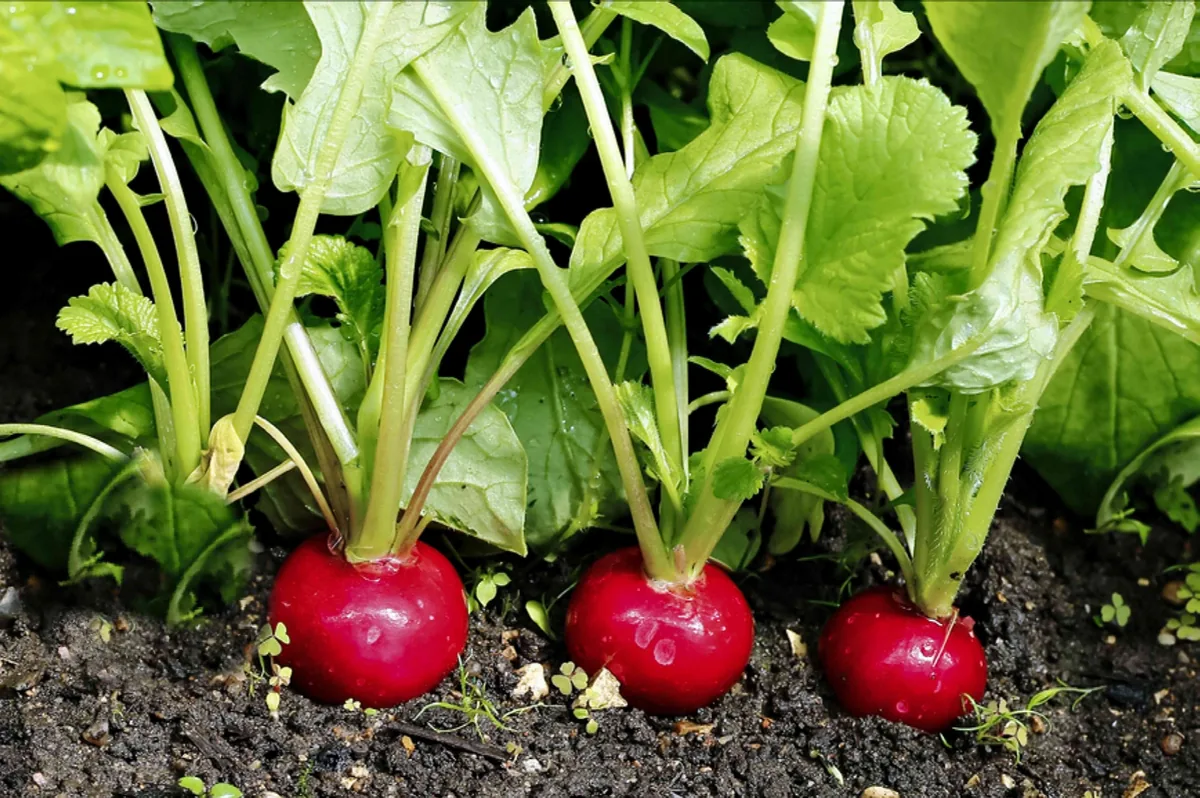
The Radish (Raphanus sativus) is a fast-growing root vegetable cultivated for its edible root and greens. It comes in a variety of colors, including red, white, purple, and black. Radishes thrive in cool weather and can be grown in early spring and fall. The plant produces small white, pink, or purple flowers that attract pollinators. It grows best in loose, well-draining soil rich in organic matter. Prefers full sun but tolerates partial shade. Requires well-drained, loose soil with consistent moisture. Avoid excessive nitrogen, which promotes leafy growth over root development. Seeds: Direct sow seeds 1 cm (0.5 inches) deep, spaced 5 cm (2 inches) apart. Germinates within 3-7 days in optimal conditions. Thin seedlings to encourage healthy root development. Harvest radishes 3-6 weeks after planting, depending on the variety. Roots should be firm and crisp; over-mature radishes become woody and bitter.
Permaculture Functions
- Edible: Raphanus sativus globes and daikon types deliver peppery crunch weeks after sowing while young leaves cook like turnip greens -- harvest before heat turns roots woody and splits shoulders from uneven water.
- Dynamic Accumulator: Daikon lines mine compaction layers then rot into winter channels full of scavenged potassium -- flail tops before hard seed if you dislike mustard volunteers spelling next year’s carrots.
- Pest Management: Glucosinolate exudates from living roots confuse some wireworm and nematode host cues in rotation trials -- still rotate because brassica specialists eventually find radish bands if you never move them.
- Mulcher: Frost-killed tops and thinned microgreens lay fast-green mulch under garlic -- shred coarse leaves so piles do not mat anaerobic in humid weeks.
- Erosion Control: Quick fibrous roots knit spring garden soil after winter cover crop kill -- pair with oats on slopes where first rains would otherwise wash naked seed beds.
Companion Planting