About
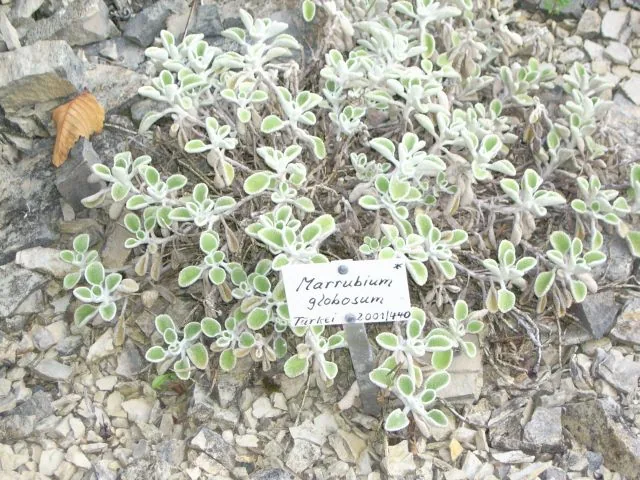
Horehound is a woolly gray mint-family perennial from Eurasia and North Africa, naturalized across much of North America. Square stems carry crinkled, white-felted leaves and small white flowers in dense whorls; plants form mounds about 1–2 feet tall and can spread into sun-baked patches. In subtropical and tropical Americas it behaves like a drought-tolerant herb for full sun and lean soil—humid air favors foliar spotting if crowns stay wet, so give spacing, breeze, and morning-only irrigation. Use it in insectary bands where bitter aroma may confuse some pests without pretending it replaces scouting. Full sun for dense wool and strongest volatile profile. Well-drained, slightly alkaline to neutral soil; tolerates poor fertility once established. Moderate water during establishment; quite drought-tolerant when roots are deep. Seeds in spring after chill period or direct sow in cool soil; light-dependent germination—surface sow and press in. Softwood cuttings in spring before flowering; strip lower leaves and root in sand/perlite. Divide mature clumps in fall or early spring when growth resumes. Harvest leafy tops just before flowering for peak bitter resin content used in traditional cough syrups and candies. For drying, cut stems in morning after dew dries; hang bundles in shade with airflow.
Permaculture Functions
- Medicinal: Marrubium vulgare foliage packs marrubiin and other bitter diterpenes used in old-school cough drops and digestive bitters -- harvest woolly tops just before bloom for peak resin, and respect pregnancy contraindications in modern herbals.
- Pollinator: Dense whorls of tiny white flowers feed honeybees and micro-wasps in dry midsummer -- bloom sequencing overlaps Mediterranean herbs so beneficials always have a mint-family pit stop along the row.
- Pest Management: Pungent volatile oils and felted leaf hairs confuse some herbivorous insects when woven into mixed aromatic edges -- pair with yarrow and lavender so no single scent profile dominates host-finding cues.
- Animal Fodder: Sheep and goats nibble bitter leaves during drought when tender pasture browns out -- offer as a minority of diet, not sole forage, because extreme bitterness limits intake.
Threats & Pressure