About
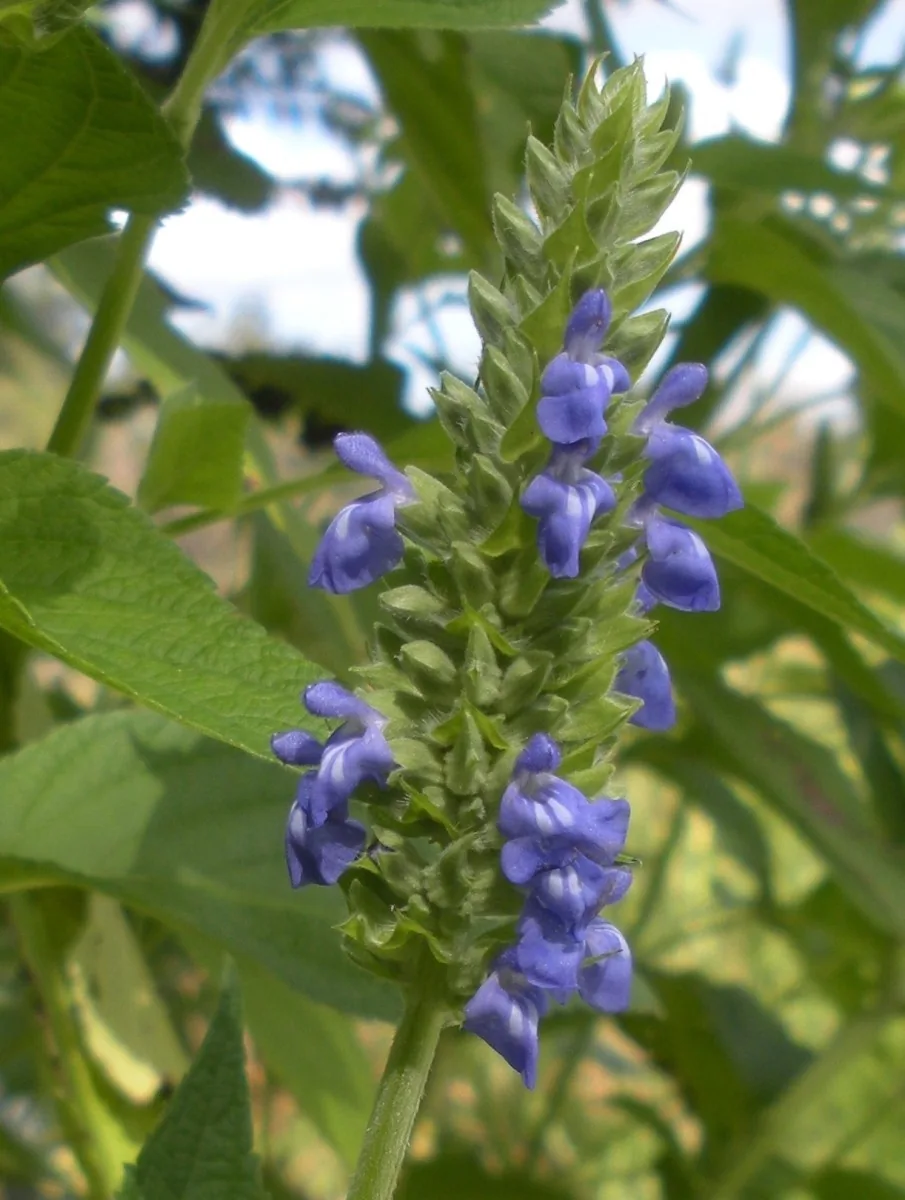
Chia (Salvia hispanica) is an annual herbaceous plant native to central and southern Mexico and Guatemala. It typically grows up to 1 meter (3 feet) tall, featuring opposite lime-green leaves with serrated edges. The plant produces spikes of small blue, purple, or white flowers that are highly self-pollinating. Its tiny oval seeds, about 1 millimeter in diameter, are mottled in shades of brown, gray, black, and white. When soaked, these seeds form a mucilaginous gel. Chia thrives in full sun and prefers well-drained soils. It is drought-tolerant once established but benefits from regular watering during germination and early growth stages. Propagation is primarily through seeds. Sow seeds directly into the soil after the last frost, ensuring they receive consistent moisture until germination. Harvest occurs approximately 100 to 150 days after planting, once the flowers have dried and seeds are easily shaken free.
Permaculture Functions
- Edible: Mucilage-rich seeds gel in water for puddings, drinks, and egg-free binders -- while supplying oil and protein from a single-season Salvia crop.
- Medicinal: Gel and seed meal appear in Mesoamerican tradition as a cooling food-medicine -- for digestion and sustained energy on long walks.
- Pollinator: Short-lived blue to white lipped flowers on upright spikes feed bees -- when nights stay warm enough for bloom.
- Wildlife Attractor: Mature seeds draw granivorous birds and rodents that also redistribute fallen seed -- along field margins.
- Mulcher: Frost-killed stalks and leaves fold into compost as fast-curing herbaceous litter -- after seed harvest.
- Dynamic Accumulator: Deepish roots and leafy growth pull minerals into standing biomass that returns to soil -- when stems are cut and composted.
- Erosion Control: Dense summer stands knit surface soil on slopes -- cover persists until harvest removes standing biomass.
- Animal Fodder: Whole plants can be chopped green into poultry or rabbit forage trials -- where seed toxicity to stock is ruled out first.
- Border Plant: Columnar flower spikes mark bed ends in warm annual rotations without shading low neighbors -- for long.
- Pest Management: Strongly scented foliage can mask host cues when interplanted with brassicas or solanums -- in mixed rows.
- Biofuel: Seed oil fraction is pressed experimentally for lamp oil and small-scale bio-oil -- where high-oil landraces are selected.
- Ground Cover: Young plants shade row middles briefly between taller crops -- re-sow when late-season gaps reopen.
Companion Planting
Also mentioned as companions:
- Bean
- Corn
- Squash
Not yet profiled in PermiePortal
Threats & Pressure