About
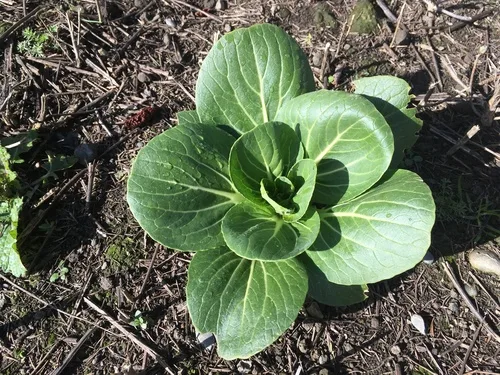
Bok Choy (Brassica rapa subsp. chinensis) is a fast-growing, cool-season leafy green vegetable commonly used in Asian cuisine. It forms loose, upright rosettes with dark green, tender leaves and thick, crunchy white stems. Depending on the variety, it can grow between 15–45 cm (6–18 inches) in height. Bok Choy thrives in well-drained, fertile soil and is best grown in spring and fall to avoid bolting in hot weather. It is highly nutritious, rich in vitamins A, C, and K, and is a good source of calcium and antioxidants. The plant is commonly grown in vegetable gardens, raised beds, and containers. Prefers full sun but tolerates partial shade. Requires well-drained, nutrient-rich soil with consistent moisture. Needs regular watering; avoid water stress to prevent premature bolting. Seeds: Direct sow in early spring or late summer for fall crops. Transplants: Start seeds indoors 4–6 weeks before the last frost and transplant outdoors when seedlings are 10 cm (4 inches) tall. Regrowing: Can be regrown from cut bases placed in water until roots develop. Baby Bok Choy can be harvested as early as 30 days after planting. Full-size plants are ready in 45–60 days. Outer leaves can be harvested individually, or the entire plant can be cut at the base.
Permaculture Functions
- Edible: Brassica rapa subsp. chinensis gives crisp white petioles and dark spoon leaves for stir-fry, soup, and quick pickles in the 30–45 day baby window -- before nights stay hot enough to bolt.
- Medicinal: Like other brassicas, leaves carry glucosinolates and carotenoids tracked in nutrition tables -- so kitchen use stays food-dose unless you are running clinical trials on your collards.
- Wildlife Attractor: Yellow four-petaled flowers on bolted plants feed honeybees and small butterflies -- if you leave a few sacrificial heads after spring harvest.
- Mulcher: Outer leaves strip fast for compost when you clean up heading plants, rotting hot because tissue is thin and high -- in moisture.
- Dynamic Accumulator: Fast roots with heavy feeding pull calcium and potassium into leaf biomass that shows up in tissue tests, useful -- if you compost culls back onto the same bed with honest pH monitoring.
- Border Plant: Short upright habit fits front-of-bed lines in cool-season rotations -- where you need a visual break between alliums and carrots.
Threats & Pressure