About
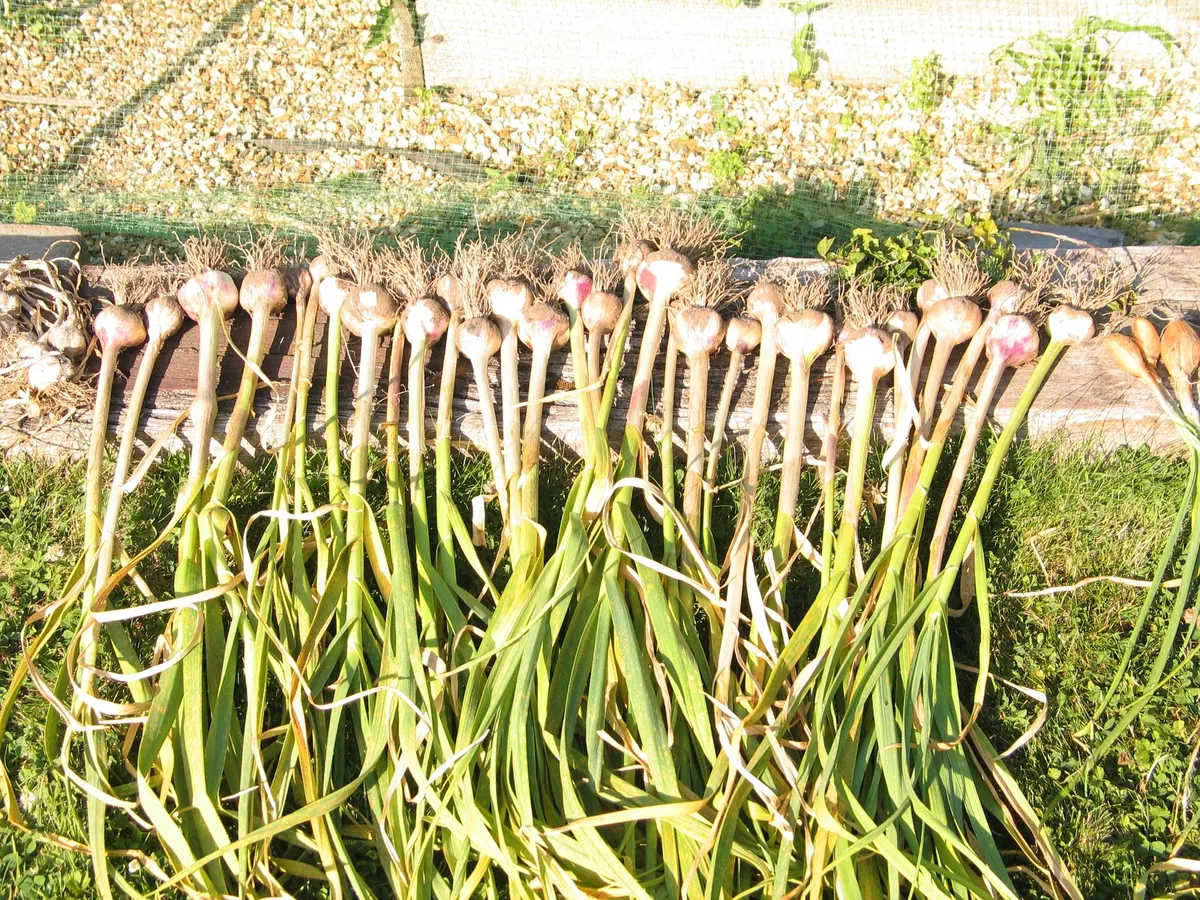
Garlic (Allium sativum) is a bulbous perennial typically grown as an annual for its pungent, edible cloves. The plant has long, slender leaves and produces small white or purple flowers. It is one of the oldest cultivated plants and is valued for both culinary and medicinal uses. Garlic thrives in well-drained, fertile soil with full sun exposure. It is commonly used as a companion plant due to its strong aroma, which repels many pests and improves overall garden health. Prefers full sun for optimal growth. Requires well-drained, fertile soil; sandy loam is ideal. Moderate water needs; avoid overwatering to prevent bulb rot. Cloves: Plant individual cloves in fall for a summer harvest. Bulbils: Some varieties produce small bulbils in flower heads, which can be replanted. No seeds: Garlic rarely produces viable seeds and is best propagated by cloves. Harvest when leaves turn yellow and begin to dry out, typically 8–10 months after planting. Allow bulbs to cure in a dry, shaded area for 2–3 weeks before storage. Can be used fresh or stored for long-term use in a cool, dry place.
Permaculture Functions
- Edible: Fall-planted hardneck cloves swell into tight heads by early summer -- scapes snap off three weeks before harvest for pesto so bulbs size fully instead of splitting.
- Medicinal: Allicin forms when cloves are crushed; traditional use spans winter cold care and kitchen antiseptic for minor cuts -- raw stomach upset is common; avoid therapeutic doses with certain blood thinners without medical review.
- Pest Management: Root-zone sulfur compounds reduce root-knot nematode pressure in following brassica beds -- inter-rows with carrots and roses confuse onion-thrips flight paths enough to matter in small plots.
- Dynamic Accumulator: Leaf analysis shows elevated sulfur and moderate potassium pulled from compost-fed topsoil and stored in wrappers that return to soil -- when you mulch stalks after harvest.
- Border Plant: Single-file cloves along bed margins mark rotation boundaries between solanaceae and legume sections and give a repeatable harvest rhythm -- for succession planning.
Companion Planting
Threats & Pressure