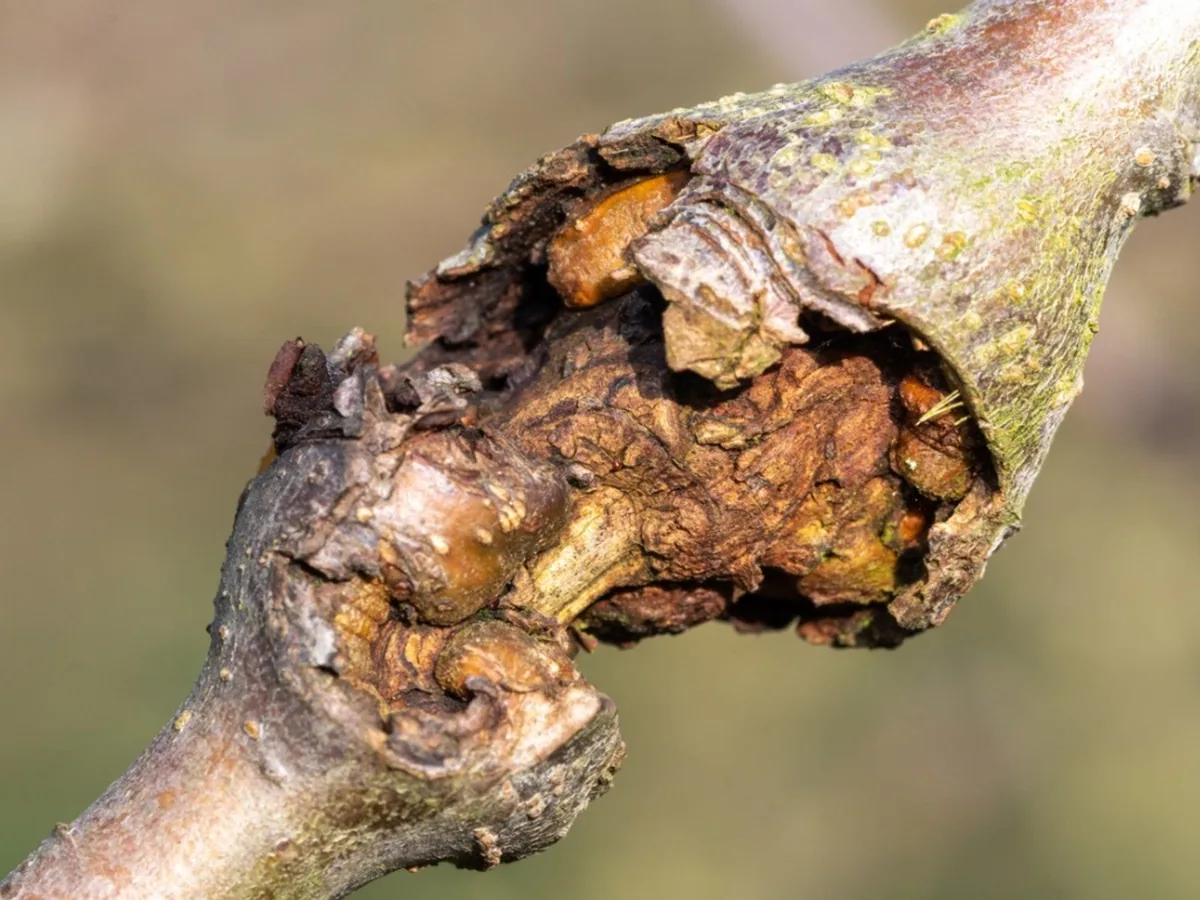
Field Identification
If leaves, stems, or fruit suddenly look spotted, sunken, or rotting, cytospora canker may already be active. This problem often starts small, then spreads across healthy tissue before most growers realize how serious it is. Warmth, moisture, and crowded foliage usually speed it up. Treat early, because waiting even a few days can turn a manageable infection into major crop loss.
Look for a pattern, not one bad leaf: expanding spots, dark or pale halos, fuzzy growth, or tissue that collapses when touched. Check both leaf surfaces, stem bases, and fruit scars where symptoms first appear. New lesions after rain, overhead watering, or heavy dew are a strong clue. When separate spots begin merging into larger dead patches, the disease is advancing quickly.
Not sure what you have? Use the symptom diagnosis tool →
How to Deal With It
Organic Control Methods
Trichoderma products applied to pruning wounds sometimes colonize cut surfaces before Cytospora spores land -- results vary with timing and moisture. Soil biology supports overall tree vigor but does not erase cankers already girdling branches. Combine biocontrol ideas with dry tools and dry weather pruning.
Water deeply on schedule so trees do not cycle drought stress and root rot alongside canker risk. Balance nutrition; deficiencies and excesses both weaken wood. Inspect bark after cold snaps and hail for cracks that invite infection. Monitor early summer for sunken lesions and gum on stone fruit and spruce.
Prune infected limbs during dry forecasts and remove wood from the site -- spores splash from infected piles. Open canopy for airflow so branches dry before nightfall. Avoid overcrowding windbreaks where humidity stays high and wounds heal slowly.
Sterilize pruning tools between cuts with alcohol or bleach solutions labeled for tools -- simple, boring, effective. Chip or burn infected debris where fire rules allow; do not chip onto paths you walk between healthy and sick trees. Rake fallen twigs that hold inoculum.
Some copper and lime sulfur programs fit dormant windows on labeled crops -- read stone fruit and spruce sections. Neem shows limited utility on canker fungi; prioritize wound prevention and sanitation. Bordeaux paint on large cuts is old but still about timing and coverage, not faith.
Let Nature Handle It
Natural Enemies
- Trichoderma spp.
- Beneficial Soil Microbes