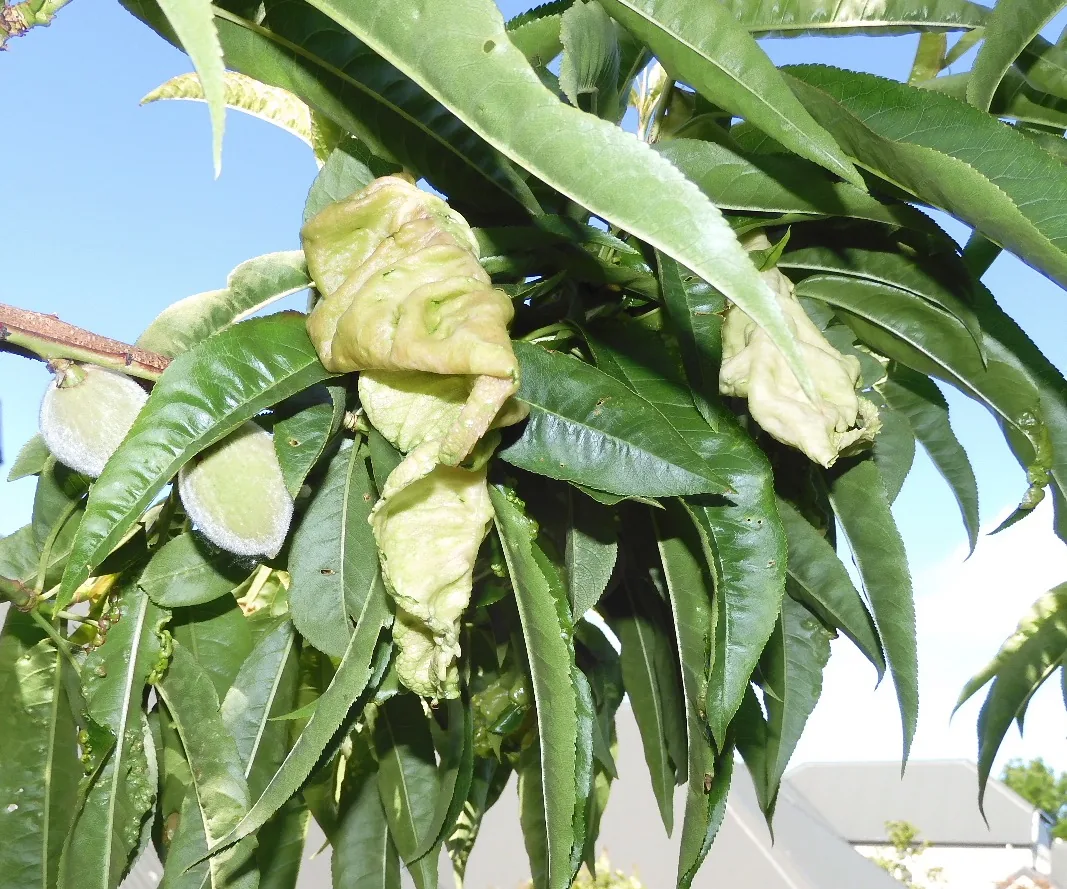
Field Identification
If leaves, stems, or fruit suddenly look spotted, sunken, or rotting, leaf curl may already be active. This problem often starts small, then spreads across healthy tissue before most growers realize how serious it is. Warmth, moisture, and crowded foliage usually speed it up. Treat early, because waiting even a few days can turn a manageable infection into major crop loss.
Look for a pattern, not one bad leaf: expanding spots, dark or pale halos, fuzzy growth, or tissue that collapses when touched. Check both leaf surfaces, stem bases, and fruit scars where symptoms first appear. New lesions after rain, overhead watering, or heavy dew are a strong clue. When separate spots begin merging into larger dead patches, the disease is advancing quickly.
Not sure what you have? Use the symptom diagnosis tool →
How to Deal With It
Organic Control Methods
No insect or mite eats Taphrina leaf curl out of a peach tree -- this is a fungal pathogen, not a bug buffet. Healthy soil food webs still matter because they support roots that handle drought stress after infected leaves drop early. Compost teas and diverse understory plants do not replace copper; they keep the tree from stacking other problems on top of curl. Antagonistic microbes show up in research trials; in the backyard, assume they are helpers after you handle sanitation and timing.
Spores overwinter on bark and bud scales, then infect young leaves as soon as buds open in cool, wet springs -- the entire game is hitting that dormant window before pink bud. In wet climates, mark your calendar on a rainy day in late winter to mix copper, not when petals fall. Scout buds weekly from dormancy break; if long wet spells sit on the orchard, you may need a follow-up label timing. Missing dormancy is how curl wins in maritime fruit country.
Plant resistant peach and nectarine cultivars where catalogs list proven field resistance -- rootstock alone rarely fixes curl. Avoid heavy nitrogen that pushes ultra-succulent spring leaves; soft tissue is easier to colonize. Rake and remove infected leaf fall from under trees if local rules allow; hot compost away from the canopy. Improve drainage so roots do not sit in water while leaves fight fungus. Widen spacing or thin crowns so inner twigs dry before nightfall.
Prune out dead wood and crowded interior branches to let air move through the canopy -- drying leaves faster shortens infection windows. Remove severely infected shoots that distort growth and harbor secondary spores. On small trees, strip the worst curled leaves only if you catch them early; late in the season, focus on sanitation. Power-wash tools between trees when you suspect bacterial canker alongside curl so you do not move wounds around.
Fixed copper or Bordeaux mixture applied during dormancy and again at bud swell, before green tissue shows, is the backbone of organic peach programs -- read the label for your stone fruit and rate. Lime sulfur dormant sprays can suppress overwintering spores on bark when labels allow; they smell terrible and work best as part of a plan, not alone. If wet weather stretches into bloom, some labels allow limited copper timing -- never spray open flowers if labels forbid it. Reapply after rain per label; copper washes off.
Let Nature Handle It
Natural Enemies
- Beneficial Microbes
- Soil Antagonistic Microbes
Threat Map