About
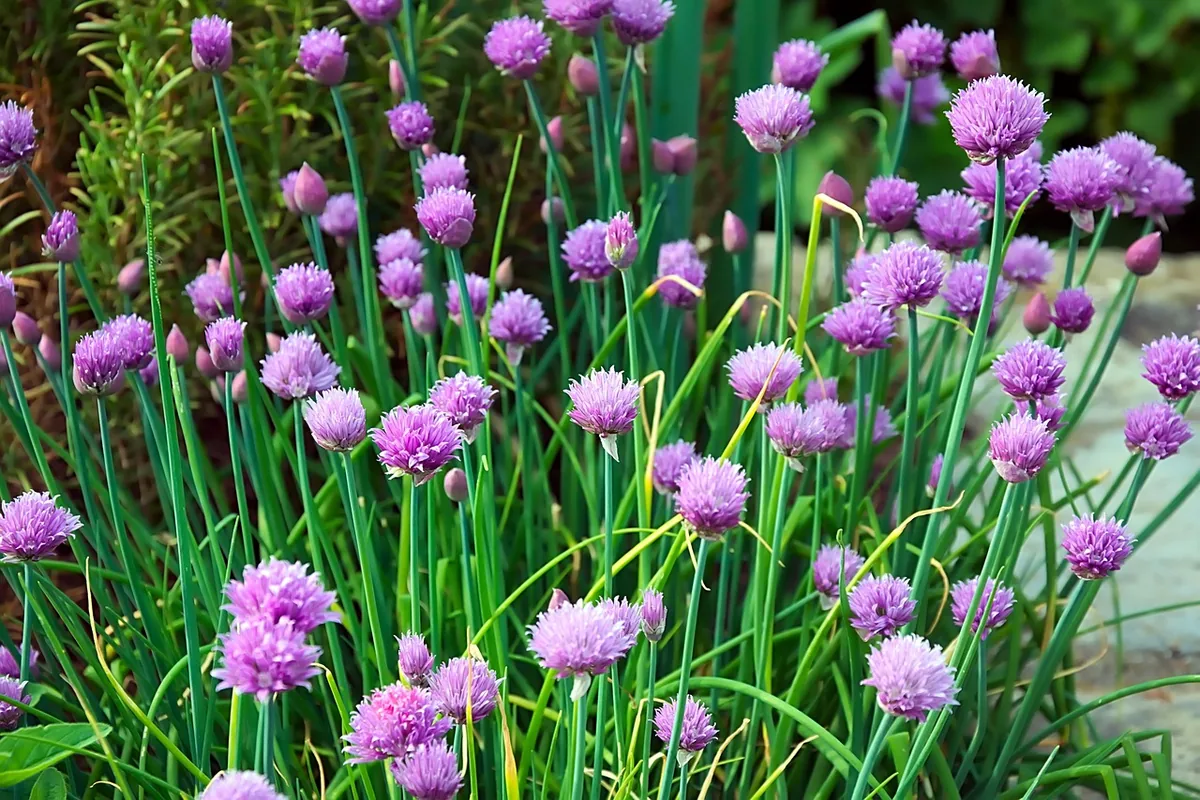
Chives (*Allium schoenoprasum*) are a hardy, drought-tolerant perennial herb belonging to the onion family. They form dense clumps of slender bulbs, each producing hollow, tubular, blue-green leaves that reach heights of 20 to 50 centimeters (8 to 20 inches). In late spring to early summer, chives produce round, pale purple flower heads that are also edible. The plant thrives in well-drained soil rich in organic matter and prefers full sun but can tolerate partial shade. Chives are known for their mild onion flavor and are commonly used in culinary dishes. Prefer full sun exposure but can tolerate partial shade. Require well-drained soil and regular watering to maintain consistent moisture, especially during dry periods. Overwatering or poor drainage can lead to root rot. Propagation is commonly achieved through division of clumps in early spring or fall. Seeds can also be sown indoors 6 to 8 weeks before the last expected frost or directly in the garden after the danger of frost has passed. Germination occurs within 14 to 21 days at temperatures between 15 to 20°C (59 to 68°F). Leaves can be harvested once they reach a height of 15 centimeters (6 inches). Regular harvesting encourages continuous growth. Flowers are harvested when fully open and can be used fresh in salads or as garnishes.
Permaculture Functions
- Edible: Hollow blue-green leaves and pale purple florets carry a clean onion note -- for eggs, potatoes, and herb butter without the storage onion bite.
- Pollinator: Round umbels of pink-lavender flowers supply nectar and pollen to honeybees and native bees in late spring -- when many early bulbs are finished.
- Wildlife Attractor: Dense clumps shelter ground spiders and small beetles at the bed edge -- while flowers feed short-tongued pollinators.
- Pest Management: Sulfur-rich Allium exudates can repel or confuse carrot rust flies and some rose-chewing beetles -- when clumps sit downwind of host rows.
- Border Plant: Neat 20–40 cm mounds edge paths and rose beds with a tidy silhouette -- that tolerates light foot brush from harvest traffic.
Companion Planting