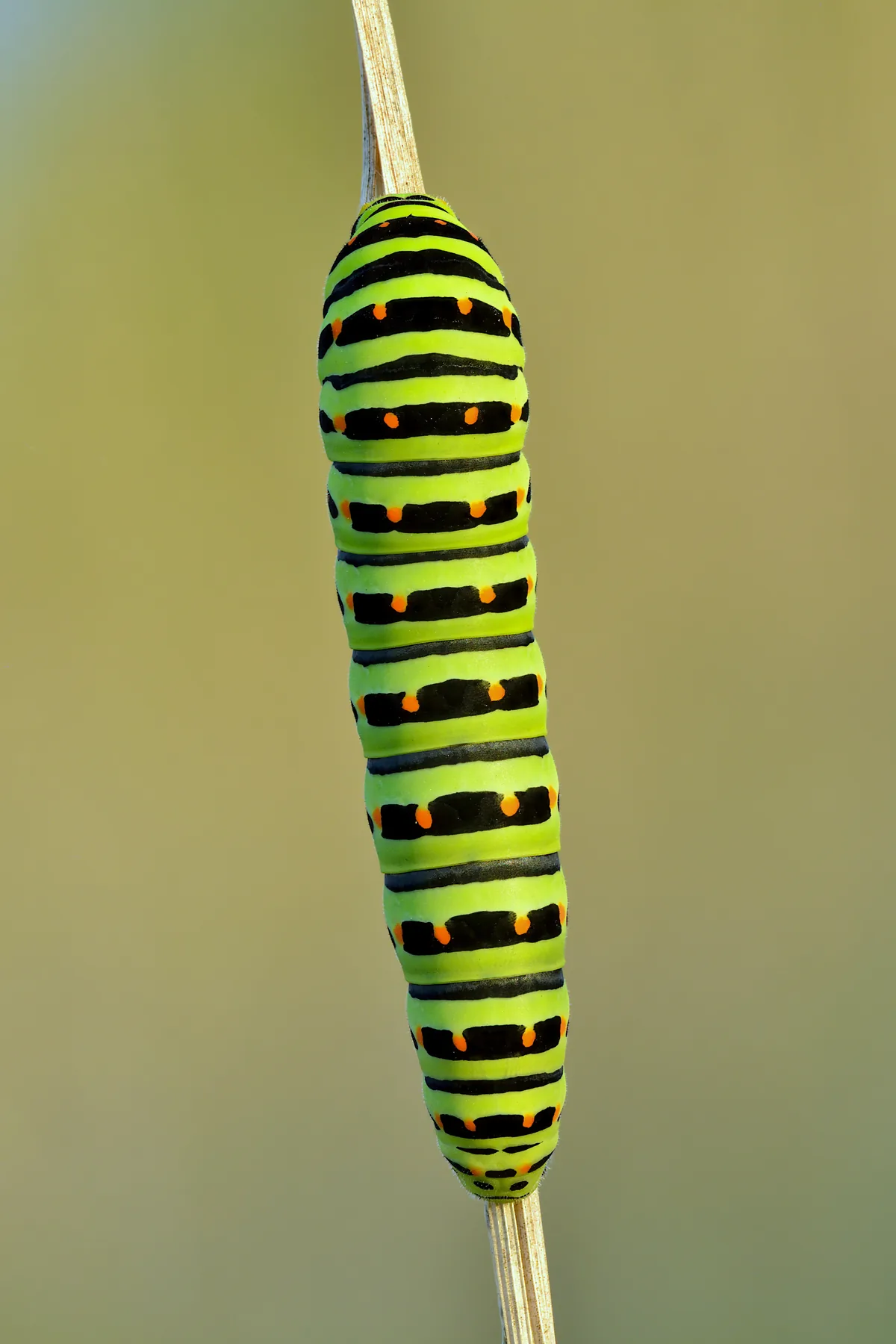
Field Identification
If leaves look shredded overnight or fruit has fresh chew holes, swallowtail caterpillar may be feeding right now. These larvae can eat fast and strip a healthy plant in a short window. Young stages are easy to miss, then damage suddenly explodes as they grow. Catch them early to avoid severe defoliation and contaminated harvests.
Check leaf undersides, growing tips, and stem junctions for eggs, frass pellets, and feeding scars. Larvae vary in color, but most have a soft segmented body and blend into foliage. Look at dusk or early morning when many species feed more actively. Fresh chewing plus live larvae or droppings on lower leaves confirms an active caterpillar outbreak.
Not sure what you have? Use the symptom diagnosis tool →
How to Deal With It
Organic Control Methods
Cotesia congregata wasps lay eggs inside swallowtail caterpillars; when you see clusters of yellow silk cocoons stuck to a still-living caterpillar, parasitoids are finishing the job. Birds, spiders, and assassin bugs pick off unwary larvae on outer leaves. If you want butterflies later, leave lightly parasitized cats alone so wasps complete their cycle -- that is free population control. Broad-spectrum sprays during late summer wipe out both caterpillars and the wasps trying to eat them, so pressure rebounds next year.
Black swallowtails lay pale round eggs on new umbels and leaf tips -- flip leaves in dill, fennel, parsley, and carrot tops from midsummer onward if you need early warning. Decide now whether this insect is a pest or a pollinator story on your land; half measures confuse everyone. If you sell herbs, flag rows that can show holes and rows that must stay perfect. Teach kids which green and black striped larvae are swallowtails so nobody panic-sprays the wrong insect on a school garden.
Plant extra dill or fennel along a fence line as a sacrifice hedge -- females often find it first and lay there while your kitchen parsley stays cleaner. Stagger parsley blocks in time so one planting bolts while another stays small; larvae move to the tallest, oldest tissue. Accept cosmetic leaf damage on mature plants; a few missing leaflets rarely change root yield. Avoid nitrogen dumps that push ultra-soft growth every two weeks; that rhythm pulls in extra egg layers and makes damage look worse than it is.
Hand-pick caterpillars in early morning when they sit on top of leaves and move them to the sacrificial patch or a jar with fresh host leaves for kids to watch pupation. Clip a whole umbel with an egg cluster if you catch it before hatch -- drop into soapy water. For a few prized pots on a balcony, row cover over parsley until you need leaves for a party, then remove cover and accept sharing. Smashing large larvae releases bright scent cues that may attract more egg layers -- relocate instead of squashing in place if numbers are low.
Sprays are rarely worth it on a butterfly host plant -- if you must, use Bacillus thuringiensis kurstaki as a spot treatment on individual larvae you cannot move, not as a fog over the whole bed. Bt only works on feeding caterpillars that eat sprayed tissue; spray at dusk and hit the leaf surface they are chewing. Even organic soap kills soft parasitized larvae and syrphid eggs nearby. If the goal is zero holes for market herbs, use exclusion and planting timing first; chemistry last and only on labeled crops.
Let Nature Handle It
Natural Enemies
- Cotesia congregata
- Birds
- Spiders
Threat Map