About
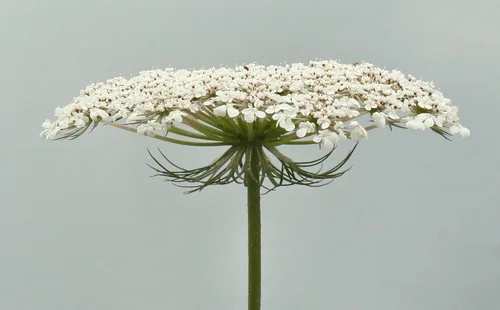
Wild carrot is the frothy white umbel of roadsides and meadows, often with a single purple floret in the "lace." First-year rosettes are easier to confuse with bad actors than second-year flowering plants — if you cannot split hairs with a botanist's patience, do not eat it. Where it is truly Daucus carota, roots smell like carrot and are edible young; seeds have old herbal use as a spice. subtropical and tropical Americas: common in disturbed sunny spots. It will cross with garden carrot if both flower — save seed away from Queen Anne if you care about cultivar purity. Full sun. Dry to average, well-drained soils; laughs at poor dirt. Drought-tolerant once established. Seed; self-sows freely. Transplant young rosettes in cool, wet weather only. Snip tender Wild Carrot growth in cool mornings for best texture -- heat-stressed leaves taste like their day job. Flowers at full color for peak volatiles; seeds when pods rattle but before they self-sow across paths. Dry herbs in thin layers; deep piles steam themselves into compost.
Permaculture Functions
- Edible: Daucus carota young first-year roots smell sweetly carrot when crushed -- still risk hemlock confusion; seeds add spice when fully dry.
- Medicinal: Seed essential oil entered traditional anti-spasm formulas -- modern use stays culinary-scale; pregnancy safety is not a forum thread topic.
- Pollinator: Flat white umbels with central purple floret are insect airports -- minute bees, syrphids, and parasitoids pack the platform.
- Wildlife Attractor: Goldfinches shred mature umbels for seed -- leave standing stems if you want finch TV.
- Border Plant: Second-year 1 m lace flowers float above lower forbs -- airy fence-line texture without shrub weight.
- Dynamic Accumulator: Deep taproot mines potassium and trace metals into biennial tops -- chop before seed rain if you do not want volunteers.
Companion Planting
Also mentioned as companions:
- Clover
Not yet profiled in PermiePortal
- Confusion with poison hemlock and water hemlock
Threats & Pressure