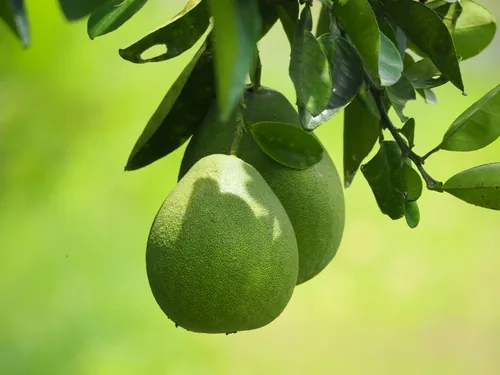
About
Pomelo is the thick-rinded ancestor of modern grapefruit, bearing huge, mild to sweet segments under a peel you could use as body armor. Trees are big, evergreen, and long-lived in frost-free sites with good drainage. Coastal and warm microclimates can push the envelope with cold-hardy rootstocks and protection, but this is still a citrus—greening, canker, and assorted psyllid drama are part of the package now. Plant only if you accept the maintenance and regulatory reality. Full sun. Deep watering on well-drained soil; less frequent but thorough beats daily sips. Mulch wide, keep mulch off the trunk, and do not let it sit in a bathtub of irrigation. Commercial trees are grafted onto selected rootstocks. Seedlings are fun experiments but take years and may not match parent fruit. Air layering and budding are nursery skills—home growers usually buy a tested tree. Pick heavy fruit when rind yields color and internal segments sweeten—thick peel buys shipping time in warm-climate yards.
Permaculture Functions
- Edible: Citrus maxima segments stay mild and crisp under thick peel that travels better than grapefruit -- peel pith makes candied strips; juice lacks the bitter neohesperidosides that dominate some grapefruit hybrids.
- Ornamental: Huge glossy canopy and fragrant white flowers sell the tree as a subtropical estate anchor -- accept Asian citrus psyllid scouting as part of the aesthetic package in endemic regions.
- Wildlife Attractor: Heavy spring nectar draws honeybees; ripe giants feed fruit bats and rodents when drops hit mulch -- sanitation rhythm decides whether you run a wildlife diner or a wasp festival.
- Shade Provider: 5–15 m rounded crown throws high dappled shade for understory pigeon pea, turmeric, or outdoor kitchens once scaffold lifts -- still thin interiors for greening disease management in humid coasts.
Companion Planting
- Waterlogged soil
- Lawn right against trunk
Threats & Pressure