About
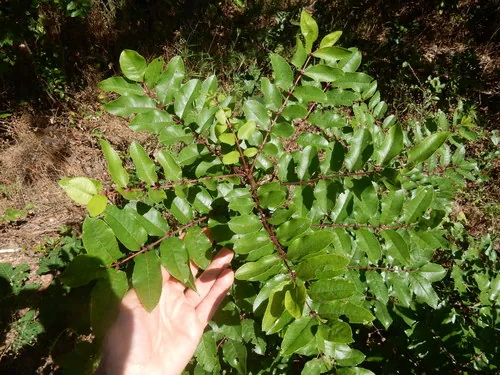
Hercules club (Zanthoxylum clava-herculis) is a spiny deciduous shrub to small tree of coastal plain thickets, dunes, and shell middens in the southeastern United States, with aromatic compound leaves, corky warty bark, and sharp thorns that announce personal space clearly. It is related to Sichuan pepper—fruits and bark carry pungent oils used cautiously in traditional practice. The plant fits living fences, wildlife thicket plantings, and storm-resilient edges where softer shrubs pretend wind does not exist. Full sun to partial shade; tolerates sandy, droughty soils and brackish influence better than many broadleaf shrubs. Moderate moisture increases growth rate. Avoid chronic wet clay without slope. Hardy through warm-temperate freezes; stems resprout after damage in humid climates. Seeds cleaned and sown warm after scarification may germinate over weeks. Root cuttings from young plants can clone thorny hedgerow stock. If collecting aromatic bark or fruit for experienced herbal use, harvest small amounts from healthy plants in ethical sites—never strip wild populations. For landscape, prune after fruit drop to shape; wear gloves and eye protection.
Permaculture Functions
- Medicinal: Zanthoxylum clava-herculis bark and dried fruits supply pungent alkamides related to Sichuan pepper -- small-batch tinctures and culinary trials belong to trained herbalists; skin irritation from fresh sap is common during careless harvest.
- Wildlife Attractor: Thorny thickets shelter nesting passerines while drupes feed small mammals where female trees set fruit -- leave interior twigs unpruned if cover matters more than tidy geometry.
- Border Plant: Corky, armed stems knit into stock-resistant hedges on shell middens and coastal dunes -- site where people will not shortcut paths, because the tree enforces personal space with sincerity.
- Erosion Control: Deep roots bind shifting sand and coquina rubble on berms exposed to salt spray -- pair with marsh elder upslope only if local ecology lists approve both players.
Companion Planting
- Thorns and caustic sap—eye protection and gloves are mandatory for pruning and rescue plantings
Threats & Pressure