About
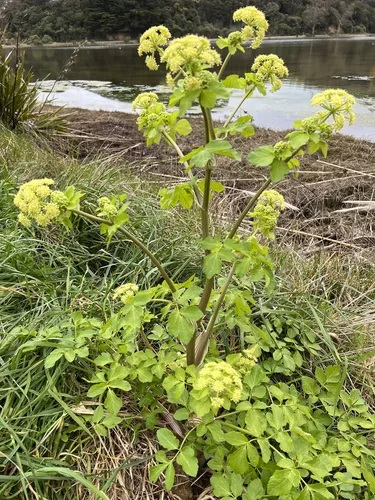
Alexanders arrived with Europeans and naturalized along coasts and roadsides — glossy, celery-ish leaves, yellow-green umbels, black seeds. It was a winter pot-herb before celery breeding took over. All parts are edible with proper timing and ID confidence; never confuse wild Apiaceae with toxic lookalikes. subtropical and tropical Americas coastal counties already host escapes; in the garden it behaves like a bold biennial that feeds early pollinators when little else is blooming. Full sun to light shade. Moist, fertile soil; tolerates coastal influence. Regular water in dry spells. Seed in fall or early spring; self-sows where happy. Transplant young rosettes in cool weather. Snip tender Alexanders growth in cool mornings for best texture -- heat-stressed leaves taste like their day job. Flowers at full color for peak volatiles; seeds when pods rattle but before they self-sow across paths. Dry herbs in thin layers; deep piles steam themselves into compost.
Permaculture Functions
- Edible: Smyrnium olusatrum offers celery-like stems for candying, aromatic seeds for pickling, and mild young leaves before heat turns them harsh -- harvest cool mornings because second-year hollow stems toughen fast once umbels elongate.
- Wildlife Attractor: Yellow-green umbels open early along coasts and roadsides when few other Apiaceae offer wide landing pads -- hoverflies, small bees, and parasitoid wasps work the shallow nectaries before canopy leaf-out steals the light.
- Border Plant: Glossy bold foliage backs moist perennial beds and path edges where it reads like structured landscaping until the biennial flower spike rockets upward -- give it space so it does not shade shorter herbs unintentionally.
- Dynamic Accumulator: Deep taproot mines moist fertile pockets and returns potassium-rich tops in chop-and-drop cycles -- cut before seeds shatter across pavement if volunteers are unwelcome near toxic Apiaceae lookalikes.
Companion Planting
Threats & Pressure