About
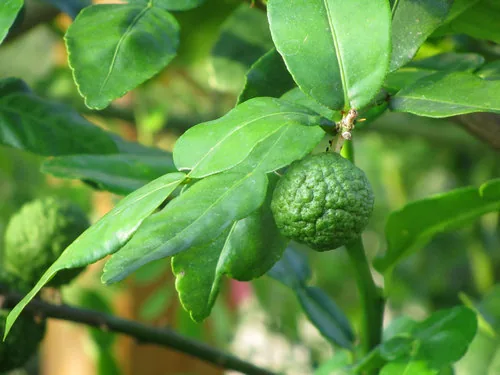
Makrut lime is grown for double leaves with explosive aroma and bumpy fruit that laughs at polite citrus marketing. Thorny, shrubby tree for warm climates; subtropical and tropical Americas needs cold-savvy siting, wind breaks, and possibly containers you can roll to shelter. Standard citrus pests and diseases apply — greening context is real in the state; buy certified stock and do not cosplay epidemiology. Full sun. Regular, deep watering with excellent drainage; hates standing water on roots. Protect young trees from drying winds. Budding/grafting onto appropriate rootstocks. Seeds are not true-to-type for culinary quality. Pick leaves anytime; use fresh or freeze. Fruit when fully colored and aromatic for zest and juice uses.
Permaculture Functions
- Edible: Citrus hystrix double leaves perfume Thai curries and tom yum while bumpy rind zests faster than sweet limes -- freeze whole leaves because fresh supply beats dried for aroma intensity.
- Medicinal: Volatile oils from leaf and peel enter traditional formulas for digestion and topical liniments -- treat as culinary medicine at food doses unless a trained practitioner pushes extracts.
- Pest Management: High citronellal loads in crushed leaves repel or confuse some soft-bodied insects when woven into polyculture edges -- still scout for Asian citrus psyllid because aromatics do not replace monitoring programs.
Companion Planting
- Low frost holes and chronically wet lawn swales
Threats & Pressure