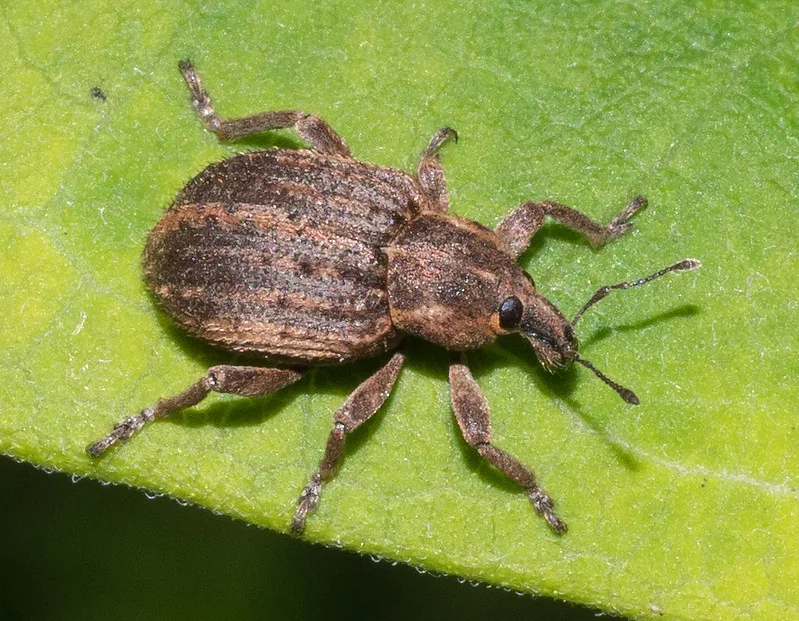
Field Identification
If plants are wilting, notching at the edges, or fruit and roots show hidden feeding damage, clover weevils may be the cause. Adults chew above ground while larvae often feed out of sight inside soil, stems, or fruit. Damage builds quietly, then plants crash fast when roots are heavily hit. Act early so a small weevil problem does not become a season-long infestation.
Look for small beetles with a hard body and a distinct snout, usually active at dawn, dusk, or night. Check for crescent-shaped leaf notches, punctures in fruit, or tiny entry holes near stems. In soil or damaged tissue, larvae are often pale, legless, and curved in a C-shape. Fresh chew marks plus snout beetles or C-shaped grubs confirm active weevil pressure.
Not sure what you have? Use the symptom diagnosis tool →
How to Deal With It
Organic Control Methods
Parasitic wasps attack clover weevil larvae in soil and stems where diverse pastures support them -- not a mail-order fix for one lawn. Ground beetles and birds eat adults walking at night. Avoid broad-spectrum sprays on whole pastures; you kill predators and keep weevils.
Walk clover stands weekly during first flights -- adults notch leaf edges before larvae mine stems. Sticky traps at canopy height show trends. Rotate hay fields with non-legume breaks when agronomy allows so overwintering adults meet fewer hosts immediately.
Balance fertility; ultra-lush clover shows notching faster but also recovers fast if weather helps. Remove heavily infested windrows and hay bales that hold larvae. After wet years, inspect stands for crown rot stacked on weevil injury.
Row covers on small seed increases block adults when edges seal -- rare at pasture scale. Sticky traps capture some adults for monitoring; vacuum is not practical on acres. On garden clover, shake plants over a sheet at dawn.
Neem and insecticidal soap contact adults on foliage -- spray at night when weevils climb stems. Kaolin may deter feeding on low-growing legumes if film stays even. Repeat after rain; short residual means timing beats brand. Combine sprays with mowing or removal of hot spots.
Let Nature Handle It
Natural Enemies
- Parasitic Wasps
- Ground Beetles
- Insectivorous Birds