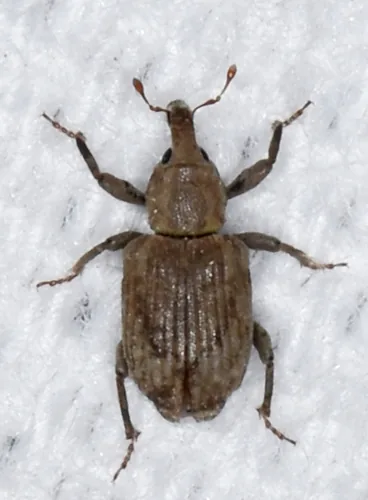
Field Identification
If plants are wilting, notching at the edges, or fruit and roots show hidden feeding damage, rice water weevil may be the cause. Adults chew above ground while larvae often feed out of sight inside soil, stems, or fruit. Damage builds quietly, then plants crash fast when roots are heavily hit. Act early so a small weevil problem does not become a season-long infestation.
Look for small beetles with a hard body and a distinct snout, usually active at dawn, dusk, or night. Check for crescent-shaped leaf notches, punctures in fruit, or tiny entry holes near stems. In soil or damaged tissue, larvae are often pale, legless, and curved in a C-shape. Fresh chew marks plus snout beetles or C-shaped grubs confirm active weevil pressure.
Not sure what you have? Use the symptom diagnosis tool →
How to Deal With It
Organic Control Methods
Beauveria bassiana and other entomopathogenic fungi can infect adult weevils and larvae when humidity stays high and spores contact the insect -- results swing with weather and formulation. Wolf spiders, ground beetles, and field crickets pick off adults and larvae when rice meets upland margins; keep ditch banks from being sterile moonscapes if you want that help. Mermithid nematodes show up in research against larvae; they are not a home-garden product you pour from a shaker. Expect biocontrol to trim edges, not replace water timing.
Adults fly from overwintering sites into new rice when fields flood -- sweep nets and floating traps along levees at establishment tell you when immigration spikes. Rotate fields out of rice into soybeans, sorghum, or other non-hosts for a year so local adults starve between paychecks. Destroy volunteer rice and weedy grasses that let weevils bridge one season to the next. Map hot spots along tree lines and roads where adults first land; scout those edges twice weekly during early flood.
Delay permanent flood until plants have a few leaves and can handle underwater feeding -- tiny seedlings are sitting ducks. Drill-seeded rice with delayed flood often outpaces injury compared with water-seeded rice flooded too early. Keep seed evenly emerged so the whole field is not split between huge and tiny plants; weevils concentrate on weak rows. After harvest, incorporate stubble on schedule so adults have fewer places to hide near next year's field. If you manage water, avoid yo-yo flooding that stresses plants while larvae feed on roots.
Sound levees stop stray water from carrying adults between fields and from ditch banks into your crop. Some regions use brief flushing or altered water depth to move larvae -- that is extension-specific and can affect water quality rules, so ask before you experiment. In small plots, hand removal of weeds along edges removes resting sites for adults during flight. Nothing beats a tight water schedule paired with scouting; hardware without timing is theater.
Flooded rice limits organic options; neem or other botanicals may apply only in nursery trays or aerobic systems under label and certifier rules -- never assume a garden product can legally enter a paddy. If you use a labeled biological insecticide, time it to adult flight and early larval establishment, not random calendar weeks. Most organic programs lean on rotation, delayed flood, and resistant varieties instead of tank mixes. Check with your certifier before treating any aquatic production.
Let Nature Handle It
Natural Enemies
- Wolf Spiders (Lycosidae)
- Ground Beetles (Carabidae)
- Spiders
- Entomopathogenic Fungi
Threat Map