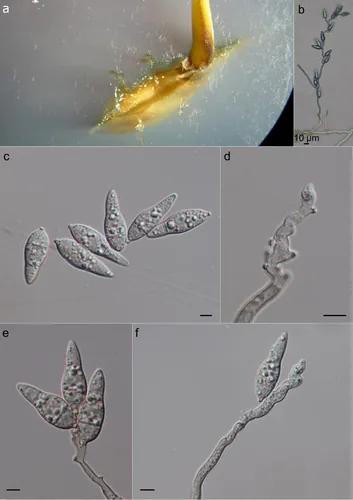
Field Identification
If leaves, stems, or fruit suddenly look spotted, sunken, or rotting, rice blast fungus may already be active. This problem often starts small, then spreads across healthy tissue before most growers realize how serious it is. Warmth, moisture, and crowded foliage usually speed it up. Treat early, because waiting even a few days can turn a manageable infection into major crop loss.
Look for a pattern, not one bad leaf: expanding spots, dark or pale halos, fuzzy growth, or tissue that collapses when touched. Check both leaf surfaces, stem bases, and fruit scars where symptoms first appear. New lesions after rain, overhead watering, or heavy dew are a strong clue. When separate spots begin merging into larger dead patches, the disease is advancing quickly.
Not sure what you have? Use the symptom diagnosis tool →
How to Deal With It
Organic Control Methods
Antagonistic bacteria such as Pseudomonas and Bacillus species applied as seed treatments or foliar programs sometimes compete with blast spores for leaf space -- results vary with strain, rate, and humidity. They are not a stand-in for genetics or nitrogen discipline. Healthy soil microbes help roots take up silicon where available, which can toughen cell walls; that is indirect support, not a movie hero. Skip miracle compost teas unless you track batch quality; inconsistent biology wastes money and can clog sprayers.
Blast spores spread on wind and splash; new lesions pump spores within days in warm, wet weather. Use certified seed and avoid saving seed from infected fields. Scout at tillering and again at boot for diamond-shaped lesions with gray centers -- early detection buys time to adjust nitrogen or water. Remove weeds that shade rows and keep dew on leaves until noon. In home gardens, space plants so air moves; blast loves a tight, humid canopy.
Plant varieties with stacked resistance genes where seed catalogs are honest about field performance -- resistance is the backbone of blast management. Split nitrogen carefully; excessive N pushes soft, dark green tissue that blast colonizes fast. Destroy infected stubble by incorporation or managed flooding where allowed so spores do not volunteer next season. Avoid overlapping rice crops between neighbors; spores do not respect fence lines. In upland systems, avoid light, frequent irrigation that keeps leaves wet all night.
Alternate wetting and drying, the systematic irrigation of rice (SRI), or other intermittent schemes reduces leaf wetness compared with constant deep flood -- but only where you truly control water depth and timing. Raising and lowering water on a schedule beats random guessing. In small plots, hand-thinning overcrowded hills improves airflow through the canopy. Remove the first infected leaves only if disease is local; do not spread spores on wet hands between plants.
Copper and sulfur have partial activity on leaf blast if you start before lesions merge; they are weak against panicle blast once necks girdle -- there is no organic rescue at that stage. Bacillus-based biofungicides and potassium silicate programs can strengthen cell walls when combined with resistant varieties and nitrogen control. Spray on schedule before rain events if labels allow. Rotate products so you do not build copper loads in soil on tiny gardens. Accept that organic tools blunt the curve; they do not erase genetics or bad weather.
Let Nature Handle It
Natural Enemies
- Antagonistic Bacteria
- Competitive Fungi in Residue
- Soil Antagonistic Microbes
Threat Map