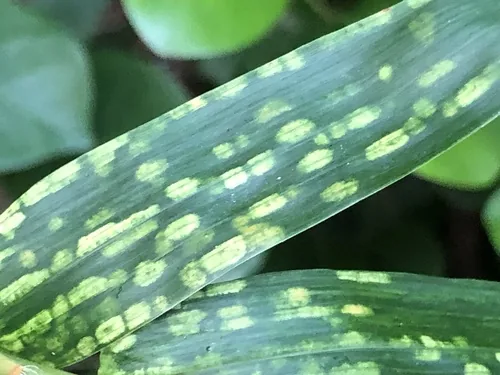
Field Identification
If leaves look dusty, speckled, bronzed, or curled without obvious chewing, bamboo mite is a likely suspect. Mites are tiny but can multiply fast, especially during heat and dry air. Plants lose vigor as feeding drains cell contents from leaves and tender growth. Early action matters, because heavy infestations can spread through a bed in days.
Use a hand lens and check leaf undersides first, especially near veins and new growth. Look for pinprick stippling, fine webbing in some species, and tiny moving dots that range from pale to red or brown. Tap a leaf over white paper; moving specks suggest active mites. Stippled leaves plus mites or eggs clustered under foliage confirms the diagnosis.
Not sure what you have? Use the symptom diagnosis tool →
How to Deal With It
Organic Control Methods
Predatory mites such as Neoseiulus fallacis hunt spider mites on bamboo when humidity stays above fifty percent and broad sprays do not wipe them weekly. Phytoseiulus persimilis works best on warm, humid nights in enclosed courtyards; outdoor groves often rely on native predators if you stop killing them. Minute pirate bugs patrol leaf folds once mites draw honeydew. Release predators after a hard water knockdown so they meet fewer pesticides and more prey per leaf.
Bamboo mites crawl in on new divisions and nursery pots -- quarantine every new plant in bright shade for two weeks and scout the sheath fold with a lens before it joins a collection. Early mites live where the leaf still rolls tight; late mites cover whole culms. If you buy mail-order bamboo, open the box outside and rinse before it touches other pots. Dry, dusty hedges along roads invite mites every drought; plan irrigation before stippling covers the block.
Rinse foliage during dry spells -- mites explode when leaf surfaces are dusty and humidity drops. Avoid dumping nitrogen that pushes ultra-soft new shoots every flush; succulent tissue feeds faster mite cycles. Thin interior culms on clumping bamboo so air moves and sprays or water reach both leaf sides. In pots, upsize containers before roots stress; drought-stressed bamboo flags mites before it flags thirst. Mulch to even soil moisture, not to keep leaves wet all night.
A stiff jet of water aimed at leaf undersides dislodges mites and interrupts webbing -- repeat every two to three days for two weeks to crash a generation. Wipe heavy infestations off specimen culms with a damp cloth before predators arrive; you are buying clean real estate. For movable pots, lay them on their side and blast both sides of fans. Combine water with humidity management; dry blasting alone fails in desert wind.
Horticultural oil or insecticidal soap with a spreader-sticker coats mites and eggs when you fully wet leaf undersides -- unfurling shoots need extra attention. Spray at dusk to avoid sunburn and to spare daytime hunters. Repeat on a short interval until new growth emerges clean; one spray never fixes three generations. Neem can reduce egg laying if rotation matters; still focus on coverage. Do not mix oil and drought stress in one week -- treat when plants are not wilting.
Let Nature Handle It
Natural Enemies
- Predatory Mites (Phytoseiidae)
- Minute Pirate Bugs
Threat Map