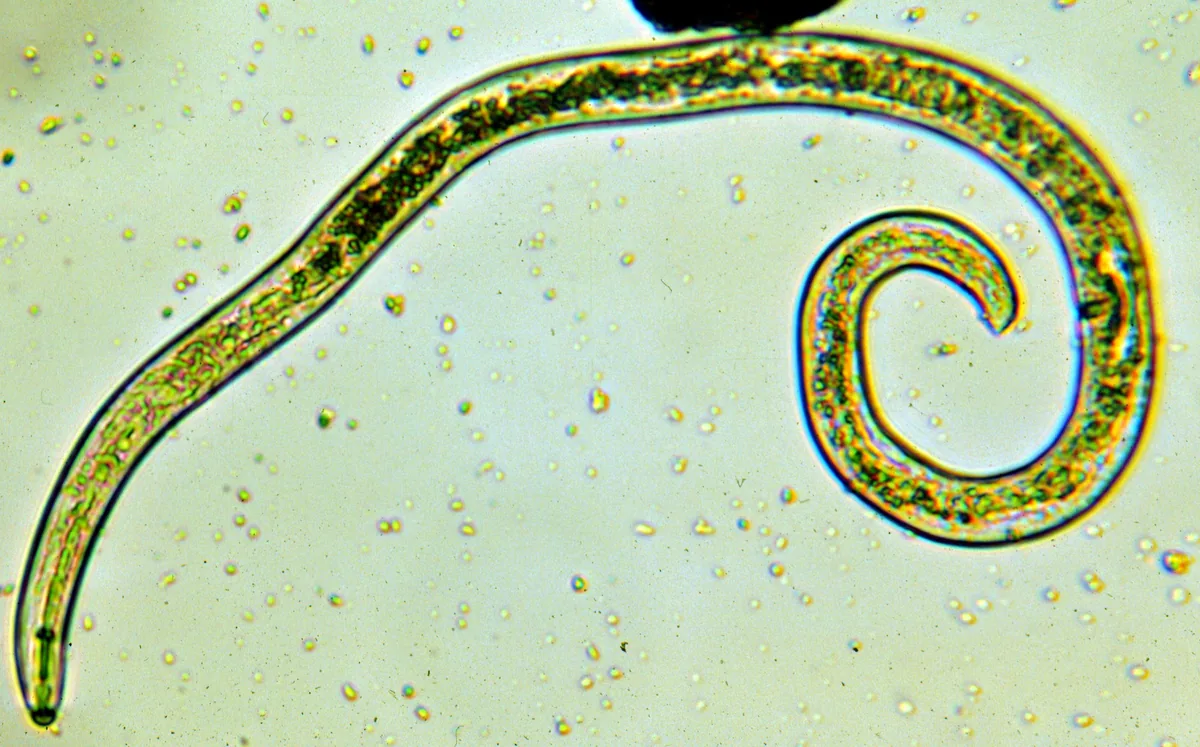
Field Identification
If plants stay stunted, yellow, and thirsty even with good care, nematodes may be attacking below ground. These microscopic pests damage roots, so the top growth declines before the cause is obvious. Yield drops and wilting worsen in heat because damaged roots cannot keep up. Once populations build in soil, control gets harder, so early detection is critical.
Gently lift a struggling plant and inspect roots for knots, lesions, branching distortion, or weak root mass. Affected plants often appear in patches rather than uniformly across the bed. Symptoms can mimic nutrient stress, but damaged roots with poor feeder growth are a key clue. Lab or microscope confirmation is best, but root injury patterns strongly indicate nematode pressure.
Not sure what you have? Use the symptom diagnosis tool →
How to Deal With It
Organic Control Methods
Predatory nematodes and fungi such as Paecilomyces lilacinus attack plant-parasitic nematodes in soil when soil temperature and moisture fit product labels -- they are not a sprinkle-on salt. Marigold and sudangrass biofumigation can suppress some species when biomass and incorporation timing match research. Beneficial microbes compete indirectly; results swing with organic matter and tillage.
Rotate with non-host crops for multiple seasons so nematode counts drop without a host. Use certified clean transplants; nematodes ride dirty roots. Sanitize tools and boots between infested and clean fields; soil clods carry eggs. Test soil before planting high-value perennials in problem fields.
Build organic matter with compost to support soil food webs that antagonize nematodes -- not overnight, but over years. Adjust pH toward crop optima; some nematodes thrive in extreme acid or alkali pockets. Avoid over-fertilizing with soluble nitrogen that pushes weak root flushes nematodes love.
Solarize soil in hot climates with clear plastic for 4-6 weeks when extension bulletins support timing -- depth kills matter. In cool zones, solarization is weak; rely on rotation and resistant varieties. Deep tillage spreads infested layers; some systems use bare fallow sparingly with erosion control.
Neem cake and neem soil products sometimes suppress nematode activity -- read labels for crop and rate. Compost teas are inconsistent unless you track batch quality. Chemical fumigation alternatives are not organic; stay within organic rules if certifying.
Let Nature Handle It
Natural Enemies
- Beneficial Nematodes
- Soil Microbes
- Predatory Fungi
Threat Map