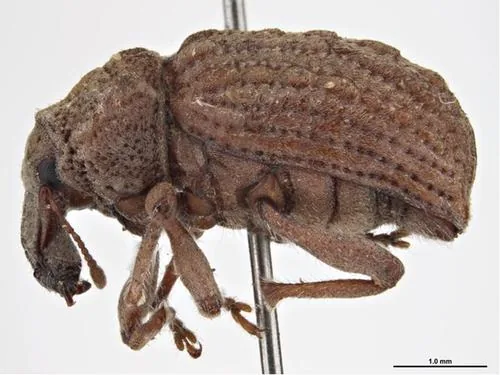
Field Identification
If plants are wilting, notching at the edges, or fruit and roots show hidden feeding damage, andean potato weevil may be the cause. Adults chew above ground while larvae often feed out of sight inside soil, stems, or fruit. Damage builds quietly, then plants crash fast when roots are heavily hit. Act early so a small weevil problem does not become a season-long infestation.
Look for small beetles with a hard body and a distinct snout, usually active at dawn, dusk, or night. Check for crescent-shaped leaf notches, punctures in fruit, or tiny entry holes near stems. In soil or damaged tissue, larvae are often pale, legless, and curved in a C-shape. Fresh chew marks plus snout beetles or C-shaped grubs confirm active weevil pressure.
Not sure what you have? Use the symptom diagnosis tool →
How to Deal With It
Organic Control Methods
Entomopathogenic nematodes (Steinernema and Heterorhabditis species) infect larvae and pupae in moist soil when soil temperature stays inside product ranges -- apply after irrigation or rain. Ground beetles and field crickets scavenge eggs and weakened adults near the soil surface. Beauveria bassiana and Metarhizium fungi infect adults and larvae when spores stay moist on the insect body. Nematodes and fungi fail in dry, cold soil; timing is everything.
Quarantine seed potatoes and cull any lot showing weevil emergence holes. Hang pheromone or food-baited traps to map adult flights; spike counts mean harvest sanitation, not luck. Destroy volunteer potatoes and nightshade weeds that bridge generations between seasons. Map infested fields and plant non-hosts for a full year when possible; adults remember coordinates.
Deep plowing or timely tillage buries adults and pupae under soil too cool for emergence if timing matches local extension advice. Rotate out of Solanaceae so emerging adults meet bare ground. Harvest tubers promptly and remove cull piles that act as larvae condos. Solarize or flood fields in highland systems only where water and regulations allow. Clean seed tubers reduce movement of hidden larvae.
Trenches lined with vertical plastic sheeting block walking adults from migrating along soil surface -- labor-heavy but used in Andean valleys. Hand-collect adults at peak flight during cool mornings; they drop when startled. Sift soil from machinery tires before moving between fields to avoid carrying pupae. Some farmers tarp infested lots under hot sun when local rules allow.
Neem and botanical oils deter feeding adults when sprayed on foliage and soil contact zones -- repeat after rain. Beauveria and Metarhizium products target adults and larvae when humidity keeps spores viable; night applications help. Combine sprays with tillage; chemistry alone rarely clears a field with heavy pupal banks. Always follow label restrictions for food crops and export markets.
Let Nature Handle It
Natural Enemies
- Ground Beetles (Carabidae)
- Entomopathogenic Nematodes
- Entomopathogenic Fungi
Threat Map