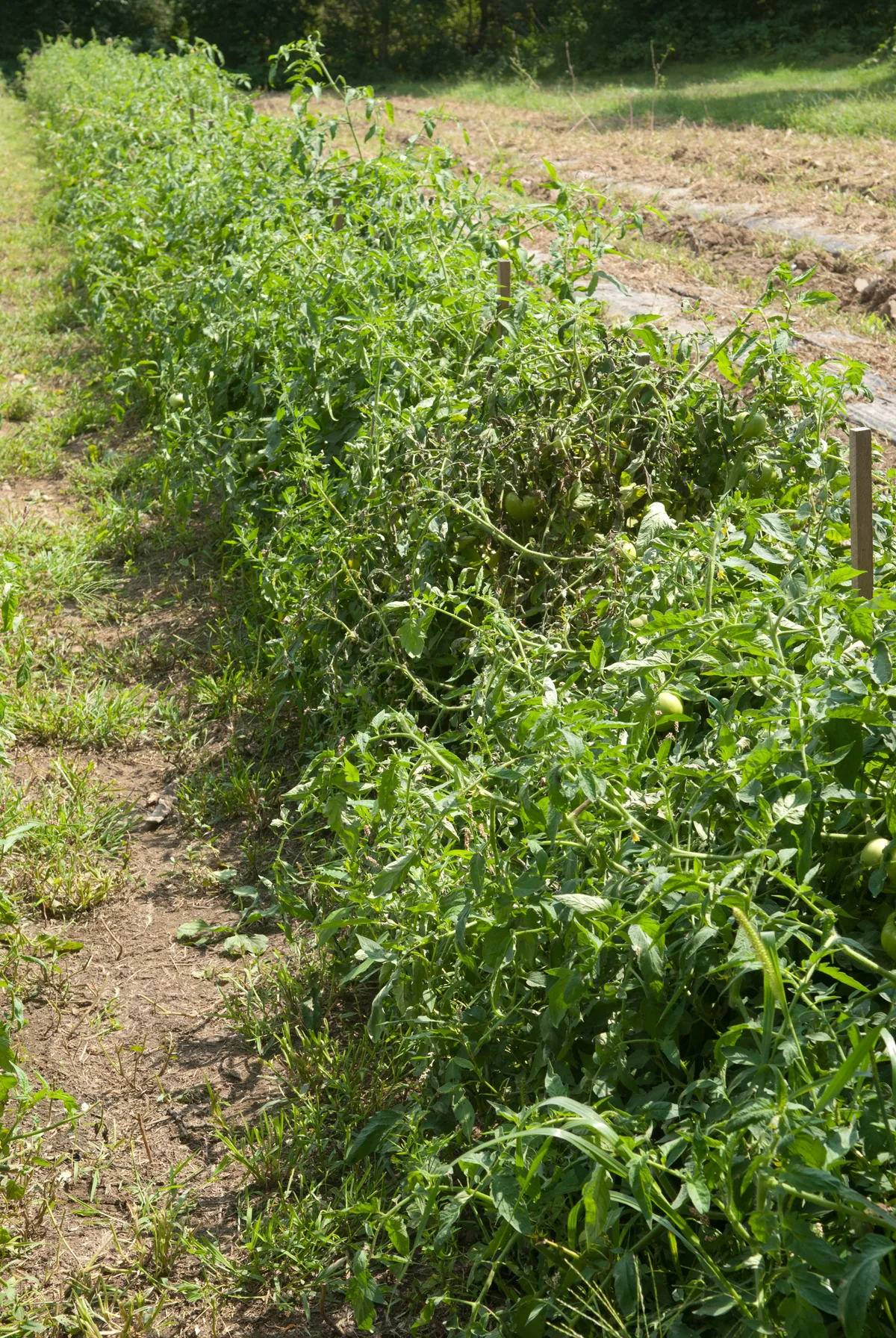
Field Identification
If leaves, stems, or fruit suddenly look spotted, sunken, or rotting, late blight may already be active. This problem often starts small, then spreads across healthy tissue before most growers realize how serious it is. Warmth, moisture, and crowded foliage usually speed it up. Treat early, because waiting even a few days can turn a manageable infection into major crop loss.
Look for a pattern, not one bad leaf: expanding spots, dark or pale halos, fuzzy growth, or tissue that collapses when touched. Check both leaf surfaces, stem bases, and fruit scars where symptoms first appear. New lesions after rain, overhead watering, or heavy dew are a strong clue. When separate spots begin merging into larger dead patches, the disease is advancing quickly.
Not sure what you have? Use the symptom diagnosis tool →
How to Deal With It
Organic Control Methods
No biological control effectively manages late blight once an epidemic is active. Compost teas and Bacillus subtilis provide marginal preventive suppression when applied consistently before infection -- not rescue treatments. The most important biological investment is in resistant varieties -- modern potato and tomato breeding has produced cultivars with significant late blight resistance that eliminate most management. Healthy soil biology and mycorrhizal fungi support plant immune response and overall resilience.
Late blight spreads explosively in cool wet weather -- overnight infection can destroy a planting in days once the pathogen arrives. Use certified disease-free seed potatoes -- cull piles and infected volunteers are the primary local inoculum source. Track regional late blight forecasting alerts -- many extension services issue warnings when conditions favor outbreak. Start copper spray programs before wet weather arrives, not after symptoms appear. Remove and bag all infected plant material immediately -- never compost.
Choose resistant varieties wherever possible -- this is the single most impactful decision for late blight management. Widen row spacing for air circulation and trellis tomatoes to keep foliage dry. Avoid overhead irrigation. Destroy all infected plants in sealed bags immediately when found -- one infected plant in a wet period can spread to the whole planting in 3 days. Eliminate volunteer solanaceous plants near the garden that carry the pathogen between seasons.
High tunnels with proper ventilation dramatically reduce late blight pressure by keeping foliage dry -- the most reliable structural protection for high-value tomato crops. Remove and bag infected plant parts immediately -- do not drop infected material on the ground where spores splash to healthy plants. For potato crops, earthing up reduces tuber infection even when foliage is affected.
Copper fungicides applied on a 5-7 day schedule during cool wet weather are the most effective organic spray -- apply before infection periods, not after symptoms appear. Copper has a protectant action only and must be on leaf surfaces before spores land. Reapply after every rain. Bacillus subtilis (Serenade) as a preventive foliar spray reduces infection rates when applied consistently every 5-7 days. No spray cures infected tissue -- remove it and protect healthy plants.
Let Nature Handle It
Natural Enemies
- Hyperparasitic Fungi (soil-borne, limited foliar effect)
- Competitive Microbes in Mulch Systems
Threat Map