Field Identification
If plants are wilting, notching at the edges, or fruit and roots show hidden feeding damage, pepper weevil may be the cause. Adults chew above ground while larvae often feed out of sight inside soil, stems, or fruit. Damage builds quietly, then plants crash fast when roots are heavily hit. Act early so a small weevil problem does not become a season-long infestation.
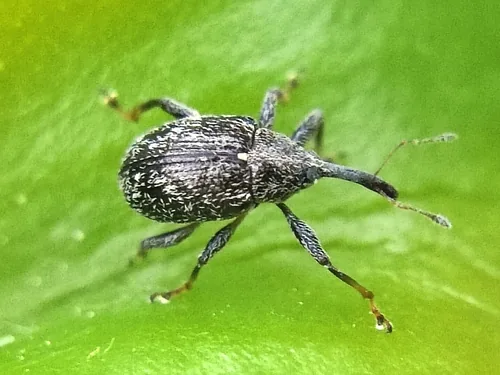
Look for small beetles with a hard body and a distinct snout, usually active at dawn, dusk, or night. Check for crescent-shaped leaf notches, punctures in fruit, or tiny entry holes near stems. In soil or damaged tissue, larvae are often pale, legless, and curved in a C-shape. Fresh chew marks plus snout beetles or C-shaped grubs confirm active weevil pressure.
Not sure what you have? Use the symptom diagnosis tool →
How to Deal With It
Organic Control Methods
Minute pirate bugs, lacewing larvae, and spiders kill some adult weevils and larvae on foliage, but pepper weevil explodes faster than generalists can eat once inside pods. Parasitoids are scarce in North American fields. Put biocontrol budget into clean transplants, perimeter weed removal, and avoiding broad-spectrum sprays that kill predators while adults re-invade from the next field. If you import biocontrols, they are backup after sanitation, not the star.
Hang pheromone-baited traps at field edges and near packing sheds -- zero tolerance matters because one mated female can seed a whole house. Source transplants from certified clean greenhouses; inspect trays before unload. Examine flowers and pin fruit with a hand lens weekly during first fruit set for egg scars and exit holes. Flag fields adjacent to last year's pepper debris; adults walk from memory.
Destroy cull fruit, aborted buds, and fallen peppers daily -- larvae complete inside pods whether you harvest or not. Till finished rows promptly so pupae in soil do not wait for next season. Remove nightshade weeds that host off-season reproduction along fence lines. Rotate greenhouse houses to a non-host break between pepper crops when economics allow; steam or sanitize floors between turns.
Research farms vacuum adults from canopies on cool mornings; most farms still rely on aggressive fruit removal and sealed exclusion netting on high tunnels. Netting works only when sides bury to the ground and doors are airlocks. Hand-pick adults into soapy water during small outbreaks on patio plants. Shake canes over a sheet at dawn before adults fly.
Pyrethrin and spinosad knock down adults when contact sprays cover the canopy and repeat during peak flight -- verify labels for pepper crop and setting. Kaolin on foliage deters feeding and oviposition if film stays even; rebuild after overhead irrigation. No organic spray fixes eggs already inside pods; sprays pair with sanitation. Avoid spraying open flowers when bees work unless labels allow narrow windows.
Let Nature Handle It
Natural Enemies
- Minute Pirate Bugs (Orius spp.)
- Lacewing larvae (Chrysopidae)
- Orb-weaver Spiders
- Ground Beetles (Carabidae)
Threat Map