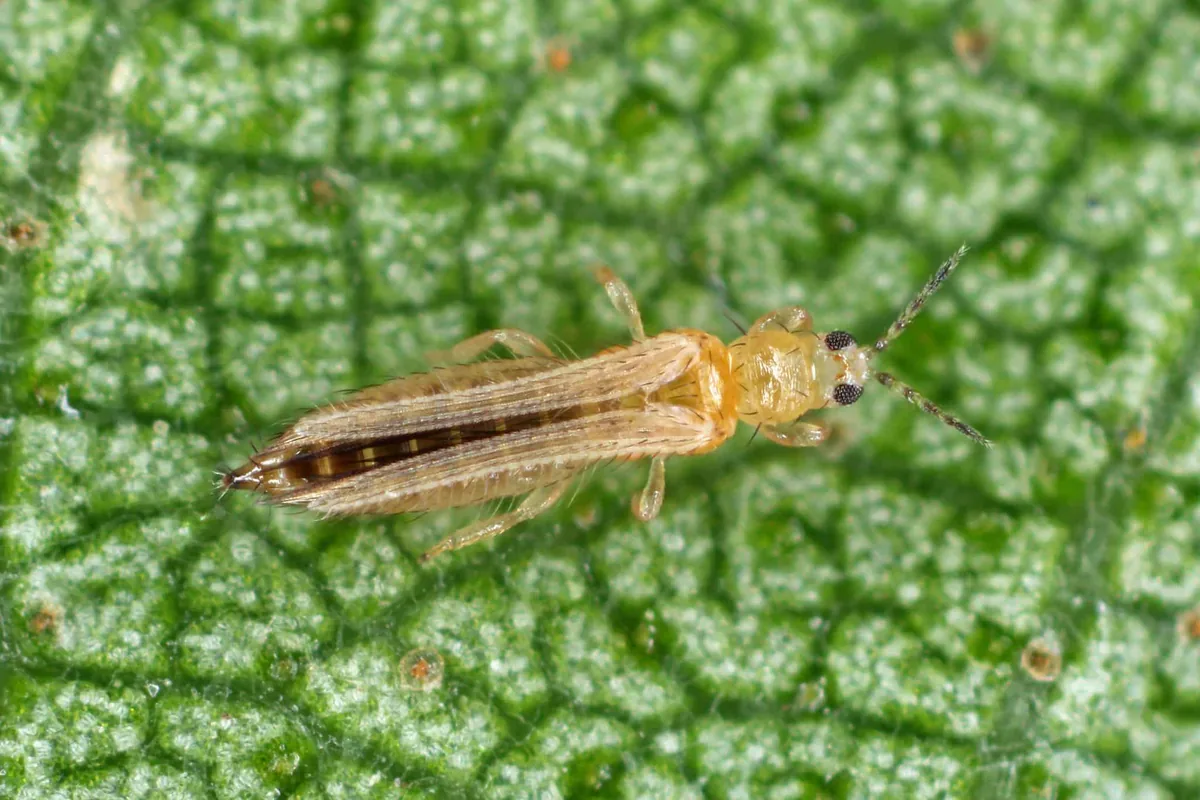
Field Identification
If new growth is curling, yellowing, sticky, or chewed, thrips may already be on the plant. This pest often builds quietly, then damage appears all at once. Feeding stress weakens growth, reduces yield, and opens the door to secondary disease. Early cleanup is much easier than fighting a full population surge later.
Inspect the newest growth first: leaf undersides, flower buds, stem joints, and tender tips where pests gather. Look for body shape, color, eggs, cast skins, honeydew, webbing, or fresh puncture marks. A hand lens and a white paper tap test help reveal small life stages. Matching visible pests with fresh plant damage confirms active infestation.
Not sure what you have? Use the symptom diagnosis tool →
How to Deal With It
Organic Control Methods
Minute pirate bugs (Orius spp.) are aggressive predators that eat thrips eggs, larvae, and adults — available commercially, release 2-5 per infested plant in late afternoon. Predatory mites (Amblyseius cucumeris, A. swirskii) specifically target thrips larvae in leaf axils and flower buds — available commercially, maintain humidity above 60% for establishment. Lacewing larvae and parasitic wasps also contribute. Support all beneficials by planting dill, fennel, and sweet alyssum nearby and avoiding broad-spectrum sprays. Thrips populations explode when beneficial insects are absent — preserve your allies above all else.
Thrips are 1-2mm and hide inside flower buds and leaf axils where sprays cannot reach. Damage shows as silvery streaking, distorted new growth, and black fecal dots on leaves before you see the insects. Tap a suspected flower bud over white paper and look for tiny moving slivers. Blue sticky traps (not yellow — thrips prefer blue) are the most effective monitoring tool. Thrips also vector Tomato Spotted Wilt Virus — a single infected thrips can transmit TSWV in under a minute of feeding, making prevention more important than reactive spraying.
Remove and bag infested flowers and growing tips immediately — thrips complete a generation in 7-10 days in warm weather and removing infested tissue breaks the cycle. Avoid excess nitrogen which produces the soft succulent growth thrips prefer. Reflective mulch under susceptible crops disorients adult thrips landing from above. Keep weedy areas near the garden mowed — many weed species are thrips reservoirs. Quarantine new plants before placing near established ones — thrips spread primarily on infested plant material.
Blue sticky traps at plant height catch adults for monitoring and modest control — check weekly. A strong water spray dislodges thrips from foliage but they quickly return — useful as a knockdown before other treatments. Row covers over susceptible crops before thrips pressure builds prevent establishment. For indoor and greenhouse plants, a handheld vacuum in early morning removes significant numbers quickly.
Spinosad is the most effective organic spray for thrips — it has systemic activity that reaches thrips inside buds and leaf axils where contact sprays cannot penetrate. Apply every 7 days for 3 weeks, rotating with other products to prevent resistance. Insecticidal soap kills thrips on direct contact but does not reach hidden stages — spray thoroughly into buds and leaf axils. Neem oil disrupts thrips development and reduces egg-laying. Apply all sprays at dusk. Pyrethrin provides quick knockdown but thrips reinvade rapidly — it is a temporary measure only.
Let Nature Handle It
Natural Enemies
- Minute Pirate Bugs
- Lacewings
- Predatory Mites
Threat Map