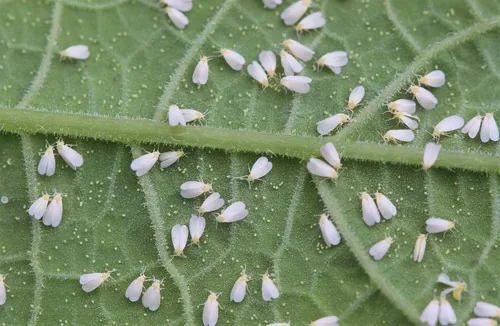
Field Identification
If leaves show trails, fruit turns soft, or roots collapse from inside, silverleaf whitefly may already be feeding. The larval stage does most of the damage, often hidden where you cannot see it at first glance. By the time yellowing or rot appears, feeding may be well underway. Move quickly when symptoms begin to prevent another wave of eggs and larvae.
Watch for tiny eggs near plant tissue, pale legless larvae inside mines or fruit, and sudden soft spots or tunnels. Adults are usually small flies that hover or dart when disturbed. Check around wounds, blossoms, and moist plant debris where egg-laying is common. Cut open suspect tissue: live maggots or fresh tunnels are the clearest field confirmation.
Not sure what you have? Use the symptom diagnosis tool →
How to Deal With It
Organic Control Methods
Encarsia formosa and Eretmocerus wasps parasitize silverleaf whitefly nymphs in greenhouses; Delphastus catalinae beetles eat eggs and crawlers fast. Lacewings supplement when humidity stays high. Release schedules matter -- buying wasps while you fog pyrethrin weekly wastes money. Outdoors, conserve locals by spot-treating hotspots, not whole yards.
Inspect propagation material aggressively; rogue virus-susceptible plants showing early symptoms before they spread plant viruses through whitefly saliva. Quarantine new color breaks in tomatoes and cucurbits. Screen intakes; adults ride wind through doors.
Remove lower leaves that harbor nymphs and virus reservoirs. Reflective mulches repel some adults in vegetable rows when edges stay buried. Avoid excess nitrogen that pushes soft growth whiteflies love. Sanitize tools between infected and clean rows in greenhouses.
Vacuum adults from greenhouse crops in evenings when they rest on leaves -- fast, cheap, no residue. Sticky cards at canopy height track trends; rising counts mean biological or spot spray windows. Power-wash walkways so adults do not crawl between bays.
Soaps, oils, neem, and Beauveria bassiana labeled for whiteflies contact nymphs and adults -- rotate modes so you do not select resistant populations in one season. Spot-treat hotspots to preserve parasitoids in neighboring plants. Spray at dusk; avoid hot sun with oils. Reapply after irrigation washes product away.
Let Nature Handle It
Natural Enemies
- Encarsia formosa
- Eretmocerus spp.
- Delphastus catalinae
- Lacewings