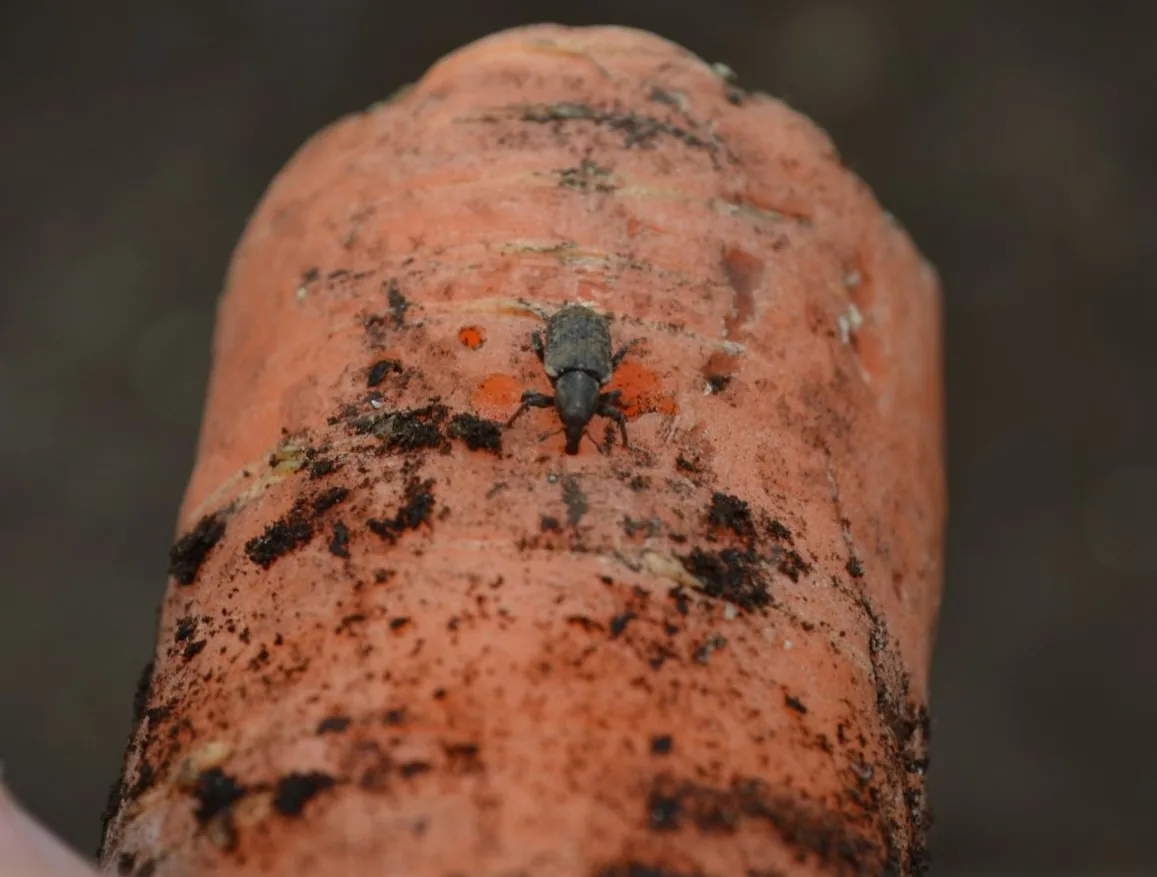
Field Identification
If leaves, stems, or fruit suddenly look spotted, sunken, or rotting, carrot weevil may already be active. This problem often starts small, then spreads across healthy tissue before most growers realize how serious it is. Warmth, moisture, and crowded foliage usually speed it up. Treat early, because waiting even a few days can turn a manageable infection into major crop loss.
Look for a pattern, not one bad leaf: expanding spots, dark or pale halos, fuzzy growth, or tissue that collapses when touched. Check both leaf surfaces, stem bases, and fruit scars where symptoms first appear. New lesions after rain, overhead watering, or heavy dew are a strong clue. When separate spots begin merging into larger dead patches, the disease is advancing quickly.
Not sure what you have? Use the symptom diagnosis tool →
How to Deal With It
Organic Control Methods
Ground beetles and rove beetles eat weevil eggs near the crown when adults lay at night; field crickets take some larvae in light soils. Parasitic wasps attack larvae in exposed tunnels occasionally -- more likely in light, sandy fields than heavy clay. Birds probe rows where foliage wilts. These helpers matter only if you avoid nightly pyrethrin baths; broad sprays flatten predators while weevils return from field edges.
Adults walk and fly into carrot and parsley blocks from overwintering sites in hedge rows and old crop residue -- scout crown tissue weekly for crescent notches on petioles and for sawdust at the base. Rotate Apiaceae fields so emerging adults meet bare ground or non-host crops. Delay planting until after peak flight if your extension publishes local dates. Remove culls and volunteer carrots that let weevils bridge one season to the next.
Avoid excess nitrogen that pushes ultra-lush tops; weevils still attack, but dense canopy hides injury until roots fail. Keep soil moisture even; drought-stressed plants flag damage late. Plow or till old beds to bury crop residue where erosion rules allow. Interplanting onions does not repel weevils in trials -- use rotation and barriers instead. After harvest, disk fields promptly so pupae have fewer safe pockets.
Floating row covers over seedbeds block adults from reaching crowns for egg-lay -- seal edges with soil or staples. Remove covers when you need to thin if flight is still active, then replace or switch to scouting. Hand-pick adults at dusk with a headlamp; they play dead. Shake canopies over a light sheet early in the morning and dump weevils into soapy water.
Neem and insecticidal soap contact adults on foliage and crowns -- spray at night when adults climb plants, not at noon when they hide in soil cracks. Spinosad on labeled crops helps when larvae are young and still near the surface. Soil drenches target eggs and young larvae only if product and label allow root crops; check certifier rules. Repeat after rain; these materials have short life on leaf surfaces.
Let Nature Handle It
Natural Enemies
- Ground Beetles
- Parasitic Wasps
- Insectivorous Birds
Threat Map