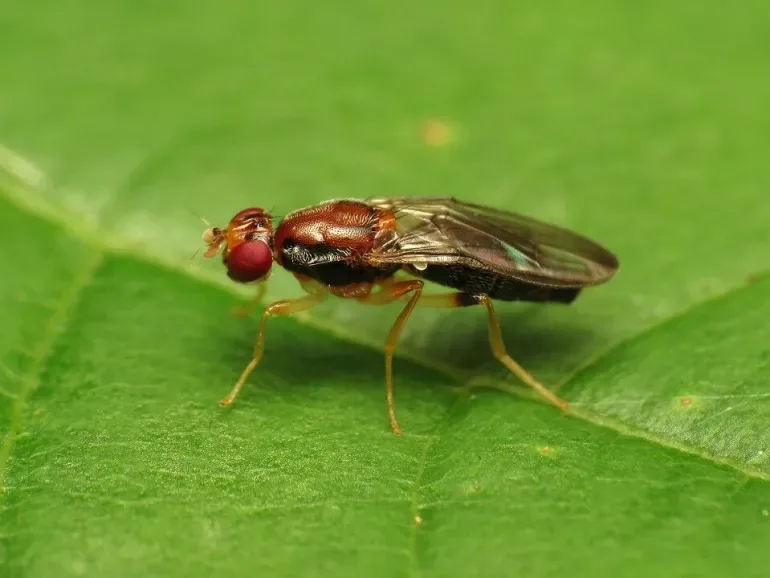
Field Identification
If leaves, stems, or fruit suddenly look spotted, sunken, or rotting, carrot rust fly may already be active. This problem often starts small, then spreads across healthy tissue before most growers realize how serious it is. Warmth, moisture, and crowded foliage usually speed it up. Treat early, because waiting even a few days can turn a manageable infection into major crop loss.
Look for a pattern, not one bad leaf: expanding spots, dark or pale halos, fuzzy growth, or tissue that collapses when touched. Check both leaf surfaces, stem bases, and fruit scars where symptoms first appear. New lesions after rain, overhead watering, or heavy dew are a strong clue. When separate spots begin merging into larger dead patches, the disease is advancing quickly.
Not sure what you have? Use the symptom diagnosis tool →
How to Deal With It
Organic Control Methods
Parasitic wasps attack carrot rust fly pupae in soil; ground beetles and rove beetles eat eggs and young larvae near the surface. Birds probe rows after wilting appears. Nematodes labeled for soil-dwelling larvae sometimes help in light soils when soil temperature fits the product. All of this fails if floating row covers are missing and sprays run weekly -- conserve predators by using barriers first.
Adults are weak fliers that cruise low along rows -- they find carrots by smell. Rotate Apiaceae beds yearly in gardens; use multi-year rotations on farms. Remove volunteer carrots and flowering umbels that concentrate flies. Time planting to miss peak flight using local extension charts. Fine mesh netting or row cover sealed at the edges beats hope. Sticky cards at canopy height track flights; rising catches mean cover or spray windows, not luck.
Clear crop debris after harvest so pupae have fewer overwintering sites in old crowns. Avoid excessive manure that pushes lush tops while roots stay tiny -- rust damage hides until harvest. Deeply prepare soil so roots grow straight; forked roots give larvae more entry pockets. In wet years, improve drainage; soggy carrots split and invite secondary rot after maggot scarring.
Floating row covers from sowing until near harvest exclude adults completely on home scales when edges stay buried. For larger fields, fine mesh tunnels work if vents do not gape. Sticky traps monitor, they rarely control alone. Heaping soil or sand around shoulders can deter some egg-lay near crowns where that practice fits your system.
Spinosad or neem directed to soil surface and lower foliage during adult flight can deter egg-laying -- apply before larvae tunnel. Insecticidal soap kills adults on contact if you spray calm evenings when flies rest on leaves. Soil-applied biologicals must match label crops. Rotate chemistries in greenhouses where flies breed year-round. Combine any spray with row cover removal only when you accept risk.
Let Nature Handle It
Natural Enemies
- Parasitic Wasps
- Ground Beetles
- Insectivorous Birds
Threat Map