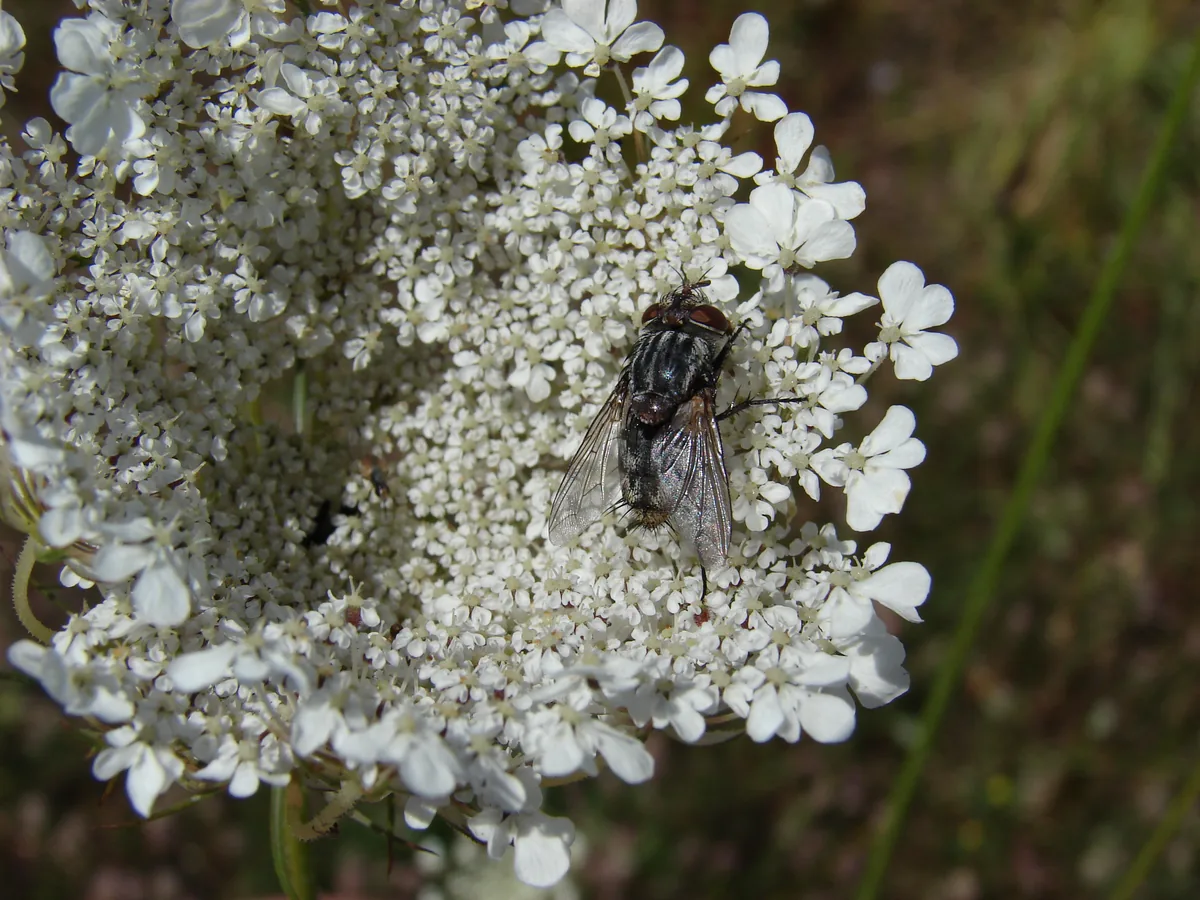
Field Identification
If leaves, stems, or fruit suddenly look spotted, sunken, or rotting, carrot fly may already be active. This problem often starts small, then spreads across healthy tissue before most growers realize how serious it is. Warmth, moisture, and crowded foliage usually speed it up. Treat early, because waiting even a few days can turn a manageable infection into major crop loss.
Look for a pattern, not one bad leaf: expanding spots, dark or pale halos, fuzzy growth, or tissue that collapses when touched. Check both leaf surfaces, stem bases, and fruit scars where symptoms first appear. New lesions after rain, overhead watering, or heavy dew are a strong clue. When separate spots begin merging into larger dead patches, the disease is advancing quickly.
Not sure what you have? Use the symptom diagnosis tool →
How to Deal With It
Organic Control Methods
Ground beetles and rove beetles eat eggs and young larvae in the top inch of soil when adults lay at the crown. Parasitic nematodes (Heterorhabditis and Steinernema species) infect larvae in workable soils when soil temperature and moisture stay inside label windows -- apply right after thinning injures roots and releases volatiles. Parasitic wasps attack pupae later in the season. Nematodes and beetles starve if plastic mulch overheats soil or if you spray insecticides weekly.
Psila rosae adults fly low, often in May through June in temperate zones -- latitude shifts dates. Hang sticky traps at carrot height and watch for the first spike; that is your cover deadline. Remove spent umbels in seed fields that pull flies from miles away. Kill volunteer carrots along roads. Delay planting two weeks if traps stay quiet and your market allows; early carrots pay more but buy more risk.
Rotate Apiaceae blocks on a strict schedule; flies pupate in soil and emerge next door. Floating row cover sealed at the edges beats inter-row onions -- onions smell nice but do not hide carrots from flies. Avoid working carrots when adults are active if bruising attracts egg-lay; some growers thin at dusk under cover. Keep fertility even; huge tops with tiny roots make every maggot wound fatal.
Fine mesh cages or low tunnels over beds stop adults physically -- inspect for holes after storms. Sticky cards at canopy height are for counting, not killing enough flies. Heavier row weights or sandbags matter; a fluttering edge is an open door. In small gardens, grow carrots in pots off the ground where flies search less effectively.
Spinosad or neem soil-directed sprays during egg-lay windows target larvae before they tunnel deep -- reapply after heavy rain washes residue. Thinning wounds release smell signals; time sprays or nematodes right after thin if labels allow. Rotate active ingredients in tunnels where flies breed continuously. Combine sprays with row cover for the first flight; sprays alone in windy fields waste money.
Let Nature Handle It
Natural Enemies
- Ground Beetles
- Rove Beetles
- Entomopathogenic Nematodes
Threat Map