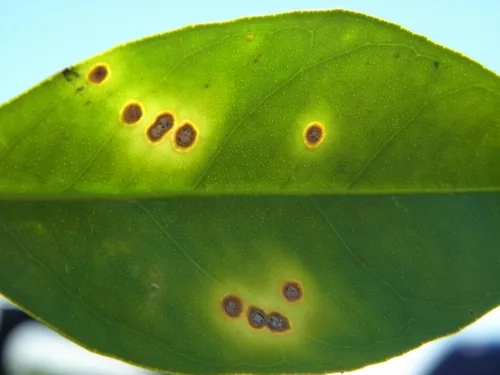
Field Identification
If leaves, stems, or fruit suddenly look spotted, sunken, or rotting, citrus canker may already be active. This problem often starts small, then spreads across healthy tissue before most growers realize how serious it is. Warmth, moisture, and crowded foliage usually speed it up. Treat early, because waiting even a few days can turn a manageable infection into major crop loss.
Look for a pattern, not one bad leaf: expanding spots, dark or pale halos, fuzzy growth, or tissue that collapses when touched. Check both leaf surfaces, stem bases, and fruit scars where symptoms first appear. New lesions after rain, overhead watering, or heavy dew are a strong clue. When separate spots begin merging into larger dead patches, the disease is advancing quickly.
Not sure what you have? Use the symptom diagnosis tool →
How to Deal With It
Organic Control Methods
No effective biological control exists for citrus canker. The most important biological connection is managing citrus leafminer -- leafminer wounds are the primary entry points for canker bacteria on new flush growth. Reducing leafminer pressure significantly reduces canker infection rates. Healthy soil biology and mycorrhizal fungi support overall tree resilience. Competitive leaf surface microflora may marginally reduce bacterial colonization -- compost tea foliar sprays are sometimes used as part of a holistic program.
Citrus canker is a serious bacterial disease regulated by law in many states including Florida -- if you suspect it, contact your state department of agriculture before doing anything. It spreads through rain splash, wind, contaminated tools, and movement of infected plant material. Plant windbreaks to reduce wind-driven rain that splashes bacteria between trees. Use certified disease-free nursery stock only. Disinfect pruning tools between trees with 70% isopropyl alcohol. Do not work in citrus when foliage is wet.
Manage citrus leafminer aggressively -- leafminer wounds are the primary entry point for canker bacteria. Prune for open canopy to improve airflow and reduce the duration leaves stay wet after rain. Remove and destroy infected branches, fruit, and leaves per local regulatory guidance -- bag material for disposal, never compost. Comply with quarantine orders and removal requirements to protect neighboring groves and orchards.
Remove infected branches and fruit per local regulatory guidance -- cut well beyond visible lesions and sterilize tools between every cut. Bag all infected material for disposal, never compost or chip. Windbreaks of non-host trees reduce the wind-driven rain that splashes bacteria between trees.
Copper-based bactericides are the primary organic spray option -- apply on a preventive schedule during periods of new flush growth and wet weather. Copper reduces infection rates but does not cure existing infections. Apply before rain events when possible. Reapply after heavy rain. Use minimum effective copper rates as copper accumulates in soil over time. Combine copper with strict sanitation and leafminer management for best results.
Let Nature Handle It
Natural Enemies
- Antagonistic Bacteria
- Beneficial Leaf Microbes
Threat Map