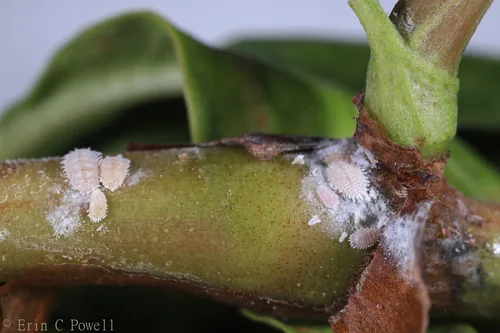
Field Identification
If new growth is curling, yellowing, sticky, or chewed, citrus mealybug may already be on the plant. This pest often builds quietly, then damage appears all at once. Feeding stress weakens growth, reduces yield, and opens the door to secondary disease. Early cleanup is much easier than fighting a full population surge later.
Inspect the newest growth first: leaf undersides, flower buds, stem joints, and tender tips where pests gather. Look for body shape, color, eggs, cast skins, honeydew, webbing, or fresh puncture marks. A hand lens and a white paper tap test help reveal small life stages. Matching visible pests with fresh plant damage confirms active infestation.
Not sure what you have? Use the symptom diagnosis tool →
How to Deal With It
Organic Control Methods
Cryptolaemus montrouzieri (the mealybug destroyer ladybug) is commercially available and highly effective on citrus mealybug -- release 2-5 per infested tree in the evening. Parasitoid wasps (Anagyrus pseudococci, Leptomastix dactylopii) also provide significant control where ants are managed. Ants protect mealybug colonies from all natural enemies in exchange for honeydew -- managing ant access is the most critical step to allow biological control to work. Apply sticky trunk barriers to prevent ant access and watch mealybug populations come under natural control within weeks.
Citrus mealybug spreads primarily on infested nursery stock and on ant activity carrying crawlers between trees. Inspect all new trees before planting. Sticky trunk barriers preventing ant access are the most important preventive measure -- ants protect mealybug from every natural enemy and without ants, populations rarely reach damaging levels. Monitor for sticky honeydew on leaves and fruit below infested areas and for white cottony masses in branch crotches.
Install and maintain sticky trunk barriers to exclude ants from the tree canopy -- this single action dramatically reduces mealybug pressure by exposing colonies to natural enemies. Prune crowded interior branches to improve spray penetration and predator access. Remove heavily infested branches during dormant season. Avoid excess nitrogen which produces the soft growth mealybugs prefer.
Scrub localized colonies with a toothbrush or cotton swab dipped in 70% rubbing alcohol -- kills mealybugs on contact and dissolves the waxy coating. Effective for light infestations on accessible branches. A strong water spray dislodges crawlers before they settle. Sticky trunk barriers preventing ant access are the most impactful mechanical intervention.
Insecticidal soap plus neem oil combination applied with thorough coverage into branch crotches and leaf axils where mealybugs cluster -- neem penetrates waxy coating better than soap alone. Apply every 7-10 days for 3 weeks to catch crawlers as they emerge. Rubbing alcohol diluted 1:1 with water kills mealybugs on contact more effectively than soap on hard-to-reach colonies. Apply at dusk to protect beneficial insects.
Let Nature Handle It
Natural Enemies
- Cryptolaemus montrouzieri
- Parasitic Wasps
- Lacewings
Threat Map