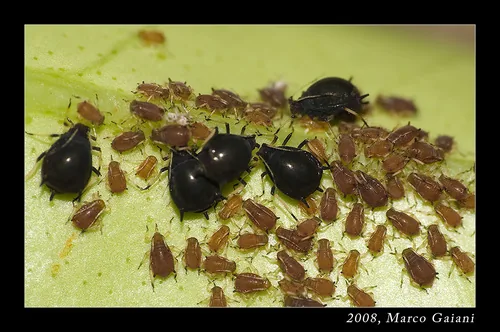
Field Identification
If new growth is curling, yellowing, sticky, or chewed, brown citrus aphid may already be on the plant. This pest often builds quietly, then damage appears all at once. Feeding stress weakens growth, reduces yield, and opens the door to secondary disease. Early cleanup is much easier than fighting a full population surge later.
Inspect the newest growth first: leaf undersides, flower buds, stem joints, and tender tips where pests gather. Look for body shape, color, eggs, cast skins, honeydew, webbing, or fresh puncture marks. A hand lens and a white paper tap test help reveal small life stages. Matching visible pests with fresh plant damage confirms active infestation.
Not sure what you have? Use the symptom diagnosis tool →
How to Deal With It
Organic Control Methods
Lady beetles, lacewings, syrphid fly larvae, and parasitic wasps (Lipolexis spp.) commonly suppress brown citrus aphid outbreaks when not disrupted by insecticides. Brown citrus aphid is the primary vector of Citrus Tristeza Virus (CTV) -- a single aphid probe transmits CTV in under a minute, meaning insecticides cannot stop virus transmission because they kill aphids too slowly. Focus all biological effort on habitat for natural enemies and preventing aphid establishment. Avoid broad-spectrum insecticides entirely on citrus -- they collapse the beneficial insect community and cause aphid population rebounds.
Brown citrus aphid vectors Citrus Tristeza Virus which has killed millions of citrus trees on susceptible rootstocks worldwide. Use CTV-tolerant rootstocks for all new plantings -- this is non-negotiable in areas where brown citrus aphid is present. Reflective mulch under young trees disorients alate (winged) aphids landing from above. Monitor new flush weekly -- brown citrus aphid infestations build quickly on tender new growth.
Preserve flowering groundcovers near citrus for parasitic wasp and lacewing populations. Knock down early aphid colonies with a strong water spray on small trees before populations establish. Prune heavily infested new flush into soapy water to destroy colonies before they spread. Avoid working in citrus when winged aphids are actively flying on warm calm days.
A strong water spray dislodges aphid colonies from new flush on small and backyard trees -- effective for early infestations before populations establish. Prune and destroy heavily infested shoot tips into soapy water. Reflective silver mulch under young trees reduces alate aphid landing rates significantly.
Insecticidal soap kills aphids on direct contact -- coat new flush growth thoroughly every 3-5 days during active infestation. Narrow-range horticultural oil on new growth suffocates colonies. Neem oil disrupts aphid reproduction and molting. Apply at dusk when beneficial insects are inactive. Accept that no spray prevents CTV transmission -- virus management requires CTV-tolerant rootstocks and biological suppression of aphid populations to low levels.
Let Nature Handle It
Natural Enemies
- Parasitic Wasps
- Ladybugs
- Lacewings
- Hoverfly Larvae
Threat Map