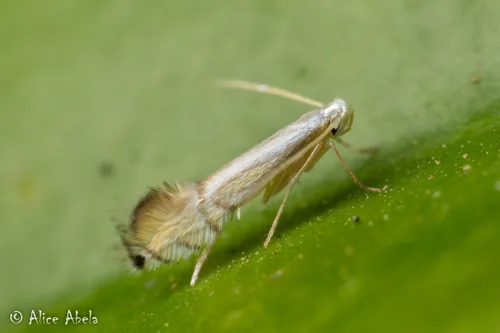
Field Identification
If new growth is curling, yellowing, sticky, or chewed, citrus leafminer may already be on the plant. This pest often builds quietly, then damage appears all at once. Feeding stress weakens growth, reduces yield, and opens the door to secondary disease. Early cleanup is much easier than fighting a full population surge later.
Inspect the newest growth first: leaf undersides, flower buds, stem joints, and tender tips where pests gather. Look for body shape, color, eggs, cast skins, honeydew, webbing, or fresh puncture marks. A hand lens and a white paper tap test help reveal small life stages. Matching visible pests with fresh plant damage confirms active infestation.
Not sure what you have? Use the symptom diagnosis tool →
How to Deal With It
Organic Control Methods
Ageniaspis citricola is a parasitoid wasp that specifically attacks citrus leafminer larvae inside mines -- it has been released in Florida and is establishing in many citrus-growing areas. Do not spray during flush periods if parasitoid wasps are active -- you will destroy your best long-term control. Healthy established trees tolerate leafminer damage well -- biological control is more important than spray programs for mature trees. Maintain diverse flowering plants near citrus to support parasitoid wasp populations.
Citrus leafminer moths lay eggs exclusively on new flush growth -- the tender pink-yellow new shoots citrus produces periodically. Young trees under 4 years are highest risk because leafminer damage can distort tree structure. Mature trees tolerate leafminer cosmetically -- the main concern is that leafminer wounds provide entry points for citrus canker bacteria. Coordinate fertilization to minimize unsynchronized flush that extends the window of vulnerable new growth.
On young trees, remove and destroy mined shoot tips when infestation is localized -- this removes larvae before they pupate and produce the next generation. Avoid heavy summer pruning that forces extensive new flush during peak moth flight periods. Maintain tree vigor with proper irrigation -- healthy trees flush more synchronously and present a shorter window for leafminer. On mature productive trees, leafminer is largely cosmetic and does not warrant intensive management.
Pheromone traps monitor adult moth flight -- hang near trees and check weekly during warm months. Remove and destroy mined terminals on young trees when found. For container citrus, fine mesh covers during flush periods completely exclude adult moths from laying eggs on new growth.
Neem oil applied to new flush growth every 5-7 days during active moth flight disrupts leafminer egg-laying and larval development. Spinosad where permitted organically provides stronger activity against young larvae before they penetrate leaf tissue -- timing to egg hatch is critical. Avoid spraying once larvae are inside mines -- contact sprays cannot reach them. For mature trees, spray programs are rarely justified.
Let Nature Handle It
Natural Enemies
- Parasitoid Wasps
- Predatory Ants
Threat Map