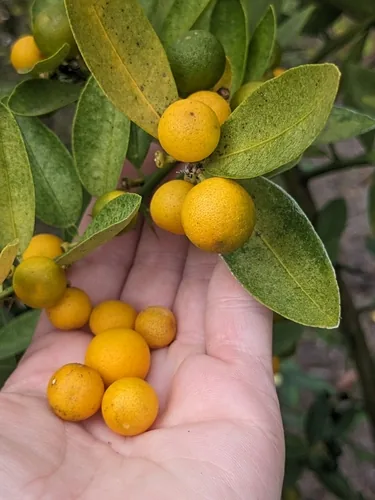
Field Identification
If leaves look dusty, speckled, bronzed, or curled without obvious chewing, texas citrus mite is a likely suspect. Mites are tiny but can multiply fast, especially during heat and dry air. Plants lose vigor as feeding drains cell contents from leaves and tender growth. Early action matters, because heavy infestations can spread through a bed in days.
Use a hand lens and check leaf undersides first, especially near veins and new growth. Look for pinprick stippling, fine webbing in some species, and tiny moving dots that range from pale to red or brown. Tap a leaf over white paper; moving specks suggest active mites. Stippled leaves plus mites or eggs clustered under foliage confirms the diagnosis.
Not sure what you have? Use the symptom diagnosis tool →
How to Deal With It
Organic Control Methods
Predatory mites (Euseius spp., Galendromus helveolus) and minute pirate bugs are the primary natural enemies of Texas citrus mite and are already present in most citrus plantings. Delay spraying until monitoring shows rising pest-to- predator ratios rather than treating on calendar. Avoid pyrethroids and broad-spectrum pesticides that collapse predatory mite populations -- Texas citrus mite rebounds faster and harder after chemical disturbance. Reducing dust on orchard roads supports predatory mite populations.
Texas citrus mite causes stippling and silvering on upper leaf surfaces. Populations build fastest during hot dry periods when predatory mites are also stressed. Scout interior canopy leaves weekly during warm months -- mites establish in protected interior locations before spreading to exterior foliage. Adequate irrigation is the most impactful prevention -- drought stress both increases mite reproduction and reduces plant tolerance of feeding damage.
Consistent irrigation throughout the season reduces Texas citrus mite pressure more reliably than most spray programs. Reduce dust in the orchard by mowing paths and roads. Avoid nitrogen flushes that prolong tender leaf availability. Monitor pest and predator mite populations together -- a ratio of 5:1 or higher pest to predator mites indicates intervention is needed; lower ratios mean let biology work.
Water washing of foliage on small backyard and container citrus temporarily reduces mite numbers -- repeat every 3-5 days for meaningful suppression. No practical mechanical control exists for larger plantings. A hand lens and white paper tap test are the essential tools for mite management decisions.
Horticultural oil applied with thorough coverage is the primary organic spray -- apply when temperatures are below 90F (32C) and above freezing, avoiding stress periods. Never mix horticultural oil and sulfur on citrus. Insecticidal soap for light infestations on small trees. Monitor pest-to-predator ratios 5 days after treatment -- if predatory mites are recovering, let biology finish the job.
Let Nature Handle It
Natural Enemies
- Euseius spp.
- Minute Pirate Bugs
- Predatory Mites
Threat Map